How to Protect Industrial Robots and Increase Operational Reliability
Protection for industrial robots: when it is needed and how to choose
A technical decision that helps preserve components, reduce downtime, and maintain productivity in robotic cells with different levels of operational demand.
Protection for industrial robots is increasingly important in operations where equipment is exposed to dust, moisture, abrasion, splashes, chemical residues, or severe temperature variations. In these situations, protecting the system is more than a preventive measure: it is a way to preserve automation reliability and reduce losses associated with corrective maintenance.
Choosing the right solution depends on the environment, the application, and the type of risk involved. Inadequate protection may restrict movement, make maintenance access more difficult, and even compromise robot performance. A properly specified solution, especially for custom-made applications, contributes to greater operational safety and longer equipment service life.
- Helps protect surfaces, joints, and sensitive components.
- Helps reduce wear caused by external agents.
- Supports greater operational stability and predictability.
- Allows technical adaptation according to the reality of each robotic cell.
With experience in industrial solutions, CIKALA offers alternatives for protecting equipment in production environments, including custom-made development for applications with specific requirements.
When protection for industrial robots is necessary
Not every operation presents the same level of exposure. In controlled environments, a robot may operate with a low risk of contamination or accelerated wear. However, in production lines involving welding, painting, washing, blasting, cutting, machining, or handling aggressive substances, protection becomes an important resource for preserving proper system operation.
In practice, the need arises whenever there are factors that can compromise equipment performance over time. These include particle buildup, contact with liquids, frequent friction, hot splashes, vapors, oils, or substances that accelerate corrosion and degradation. In these environments, protection acts as a functional barrier between the process and the equipment.
Signs that the application requires protection
- Recurring presence of dust, mist, liquids, chips, or chemical agents.
- Maintenance downtime associated with dirt, wear, or contamination.
- Need for greater consistency during intensive production cycles.
When the robotic cell operates under critical conditions, custom-made development can make a significant difference in how well the protection fits the equipment and in the overall durability of the solution.
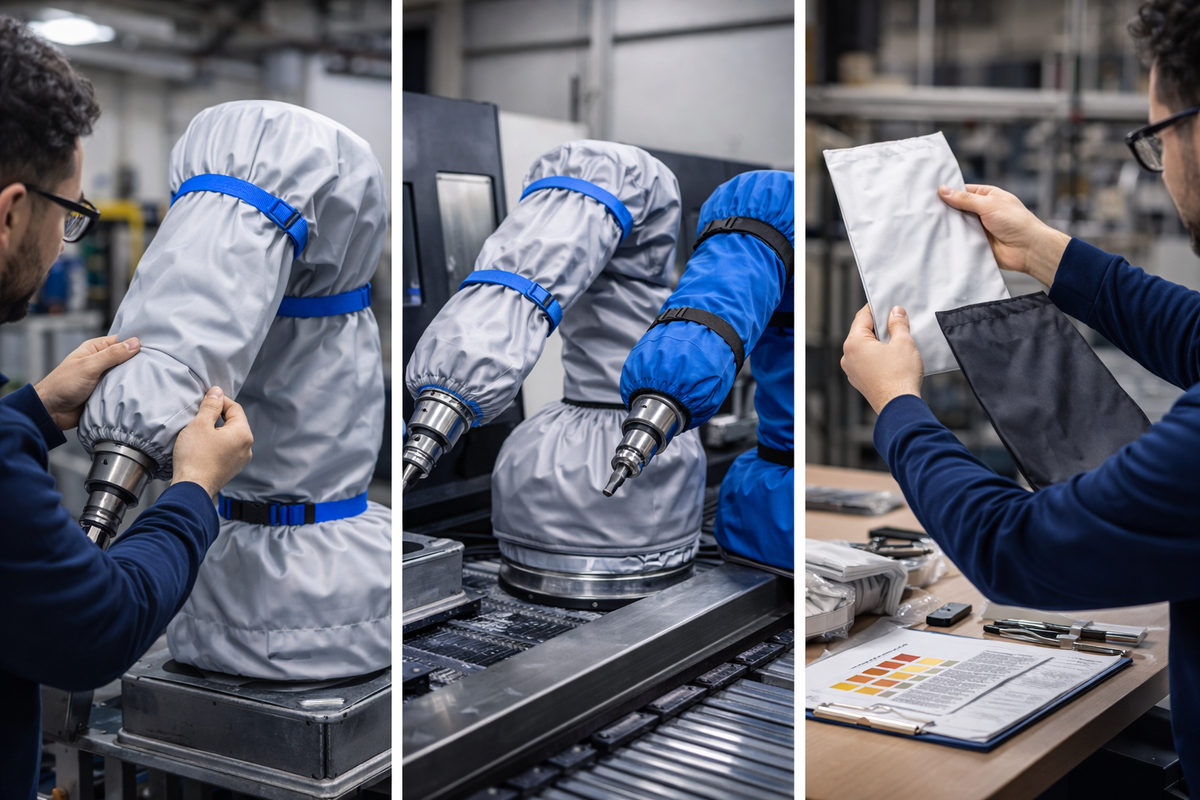
Which risks can robot protection help control?
Protection for industrial robots helps reduce the impact of external agents on critical areas of the system. This includes everything from preserving external surfaces to reducing the exposure of cables, joints, and components that must operate with precision and continuity.
Harsh environments require technical attention
In industrial processes, certain factors can quickly compromise equipment integrity. Fine dust may accumulate around moving parts, liquids may reach sensitive areas, and abrasive residues may accelerate wear in contact zones. In more complex applications, a special project is often the best way to balance protection, mobility, and ease of maintenance.
Main risks found in robotic cells
- Contamination from particles, mist, and industrial residues.
- Wear caused by abrasion, friction, and contact with aggressive materials.
- Exposure to moisture, washing processes, heat, or process splashes.
CIKALA supports operations that require technical industrial protection solutions, including a consultative approach for more complex cases and custom-made development.
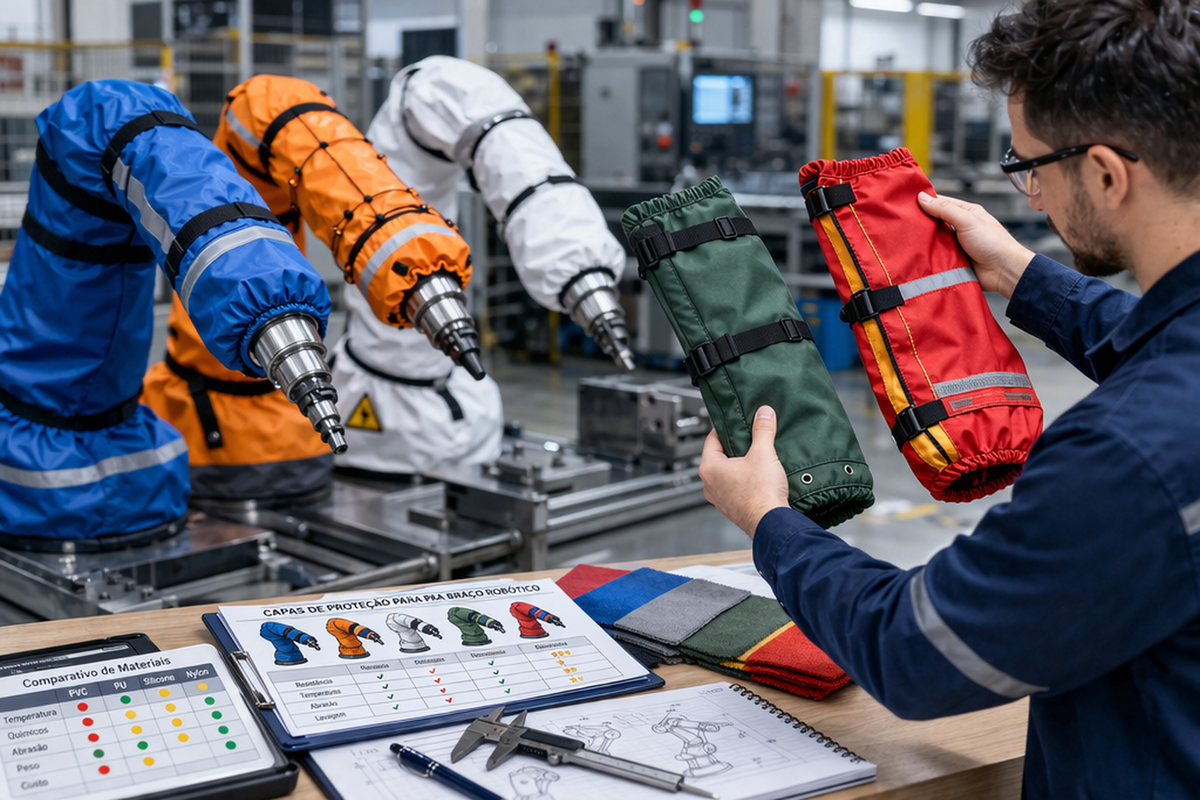
How to choose the right solution for your application
Choosing protection for industrial robots requires considering the type of process, operating intensity, movements performed, and the equipment's degree of exposure. The solution must follow the robot's dynamics without causing mechanical interference, restricting its range of motion, or creating operational difficulties in daily use.
The material, shape, fastening system, and ease of removal for inspection should also be part of the analysis. In many applications, standardized models do not provide the ideal fit. In these cases, custom-made solutions provide a better fit, stronger protection, and more consistent long-term performance.
Movement compatibility
The protection must follow the robot's axes and movements without compromising operation.
Proper resistance
The material must withstand the main environmental agents, such as heat, moisture, abrasion, or chemicals.
Ease of maintenance
Practical access for inspection, cleaning, and replacement helps keep production routines more efficient.
Technical customization
In specific scenarios, a special project makes it possible to adapt the solution to the actual layout of the robotic cell.
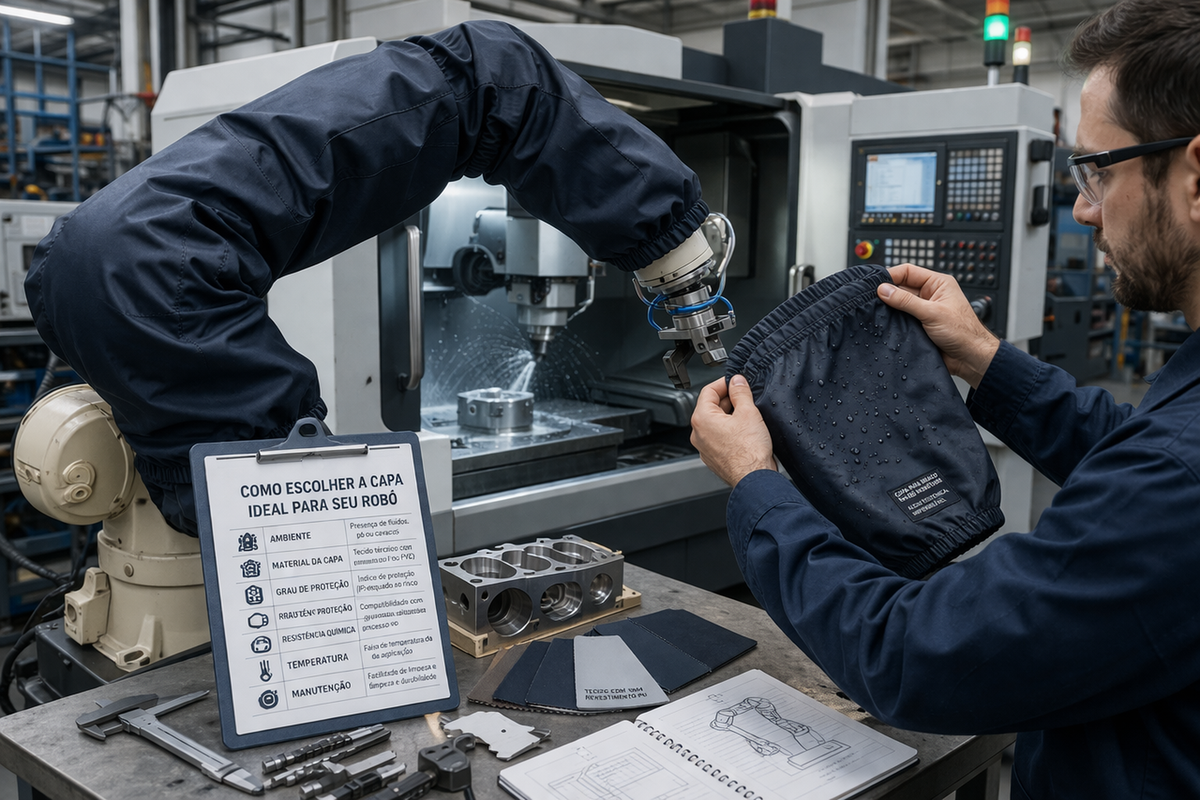
The right protection means greater safety and productivity
When a protective solution is properly specified, the benefits can be seen in several areas: reduced exposure to aggressive agents, lower risk of premature wear, greater operational continuity, and better maintenance predictability. This is especially important in automated production lines that depend on high performance and have little tolerance for unplanned downtime.
For this reason, evaluating protection as part of a reliability strategy makes practical sense. In more demanding industrial applications, the best results often come from solutions developed according to technical criteria, including custom-made alternatives and support for a special project when required.
If your company is looking for protection for robotic systems with a focus on durability, performance, and industrial application, CIKALA offers solutions for different production environments as well as technical support for customized requirements.
Looking for the right protection solution for industrial robots? Explore the options from CIKALA and contact the team through WhatsApp for custom-made support, ideal for technical applications, specific layouts, and projects that require a special solution.
Frequently Asked Questions
When is it worth investing in protection for industrial robots?
When the equipment operates in environments with dirt, liquids, abrasion, splashes, heat, moisture, or chemical agents that may compromise its performance and durability.
Does a standard solution always work?
Not always. In applications with specific geometries, complex movements, or high levels of exposure, a custom-made solution will generally provide a better fit.
What should be considered when choosing the material?
It is important to evaluate the main aggressive agent, process intensity, required flexibility, and the level of mechanical, thermal, or chemical resistance needed.
When is a special project recommended?
When the application has non-standard requirements, limited space, specific integration needs, or environmental conditions that call for a more technical and customized solution.
Where to find industrial protection solutions
CIKALA supports companies looking for materials and solutions for protection, insulation, and technical applications in production environments. Check the location on the map below.
Learn more about CIKALA
Watch the corporate video and discover how CIKALA can support industrial and technical requirements as well as customized projects.

