Custom-Made Industrial Tarpaulins
Custom Industrial Tarps: Solutions to Protect and Optimize Your Operations
Discover how custom-made tarps and technical materials can meet the protection, covering, and organizational needs of different industrial operations.
Every industrial operation faces specific challenges. Machinery needs protection during downtime, materials are stored under different conditions, and cargo requires suitable covers for transportation and handling.
This is where custom industrial tarps stand out. Rather than relying on a generic cover, companies can choose solutions designed around specific dimensions, materials, exposure conditions, and usage requirements.
Possible applications include:
- Custom covers for industrial machinery and equipment.
- Protection for cargo, pallets, and stored materials.
- Flexible partitions and enclosures for production areas.
- Technical covers for maintenance, logistics, and outdoor operations.
With experience manufacturing tarps, covers, and technical materials, CIKALA develops customized projects to meet the needs of different industrial sectors.
Why invest in custom industrial tarps?
Choosing an industrial tarp involves more than checking its dimensions. The environment, frequency of use, type of equipment, and attachment points all affect whether a cover is suitable.
With a custom design, materials and finishes can be specified according to the actual requirements of the operation.
Benefits of a customized solution
- Proper dimensions: designed to fit the shape of the machine, cargo, or structure.
- Targeted protection: materials selected according to exposure to dust, moisture, rain, or splashes.
- Ease of use: openings and closures can be planned to suit access and operating routines.
- Operational organization: covers and tarps that help identify and separate materials or areas.
- Customized finishes: reinforcements, grommets, cords, zippers, and other components can be evaluated based on the application.
Customization is also valuable for machines with irregular shapes, protruding components, or limited clearance that make conventional covers difficult to use.
Important: a thicker tarp is not automatically the best choice. Strength, flexibility, environmental conditions, and ventilation requirements must be evaluated together.
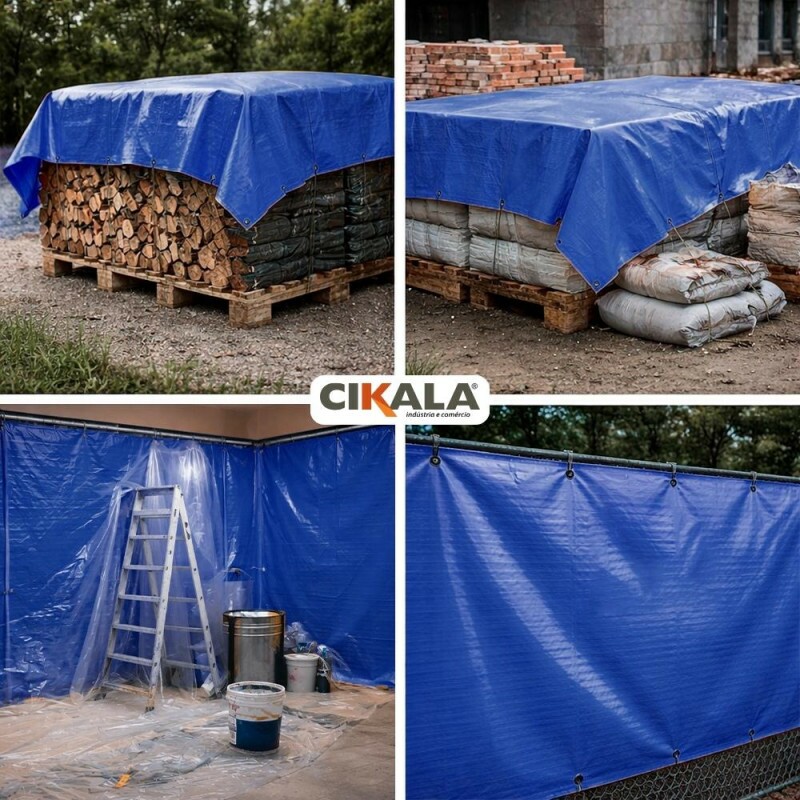
Main applications of custom tarps in industry
Technical tarps can serve a range of purposes in factories, distribution centers, transportation operations, and maintenance facilities. The right choice depends on each project's purpose and requirements.
1. Protection for industrial machinery and equipment
During downtime, storage, or scheduled maintenance, equipment may be exposed to dust, dirt, and ambient moisture.
Custom industrial equipment covers can be designed for machinery, motors, pumps, control panels, and technical assemblies, taking into account the areas that require protection.
2. Cargo covering and logistics operations
Transporting and storing materials requires attention to outdoor conditions and how the cover will be secured.
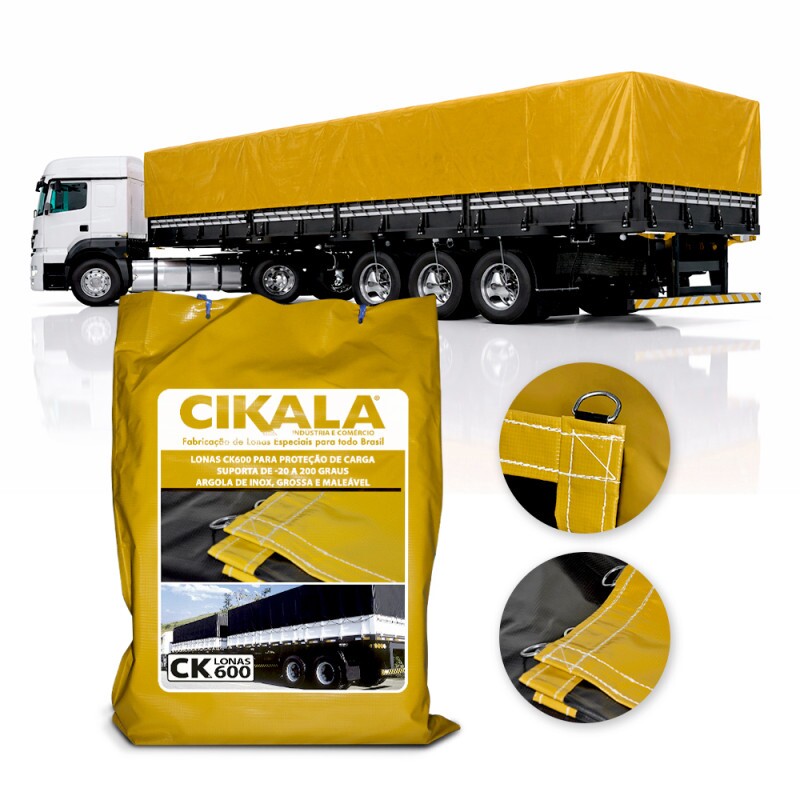
For example, the custom CK600 truck tarp uses polyester-reinforced PVC with a thickness of 600 microns and is intended for covering cargo on trucks, trailers, and open-bed vehicles.
Dimensions and attachment-point configurations must be determined according to the vehicle and the cargo being transported.
3. Protection for pallets and stored materials
In distribution centers and warehouses, custom covers help protect stored goods, raw materials, packaging, and components.
Depending on the project, options may include side closures, an open bottom, an identification window, and reinforcement in high-wear areas.
4. Industrial partitions and enclosures
Industrial PVC curtains can be used to separate departments, define work areas, and help reduce the transfer of dust and splashes between spaces.
Material selection and installation systems should account for pedestrian and equipment traffic, opening dimensions, and the specific needs of each environment.
Proper application: guards for operating machinery, welding areas, exposure to heat or chemicals, and electrical installations require a specific technical assessment. A conventional tarp must not be used as a substitute for certified safety guarding.
How to choose the right tarp for an industrial project
Selecting an industrial tarp starts with understanding the conditions in which it will be used. Before choosing a material, determine what needs protection and which factors could affect its performance.
Operating environment
Identify whether the application is indoors or outdoors and whether there will be exposure to water, dust, sunlight, or other elements.
Tarp material
Assess options such as polyethylene, vinyl PVC, and technical materials, taking their properties and limitations into account.
Dimensions and shape
Consider length, width, height, cutouts, protruding components, and the clearance needed for installation and removal.
Attachment and finishing details
Define support points, the opening method, and any need for reinforcements, closures, or visual identification.
Materials for different requirements
Polyethylene tarps, including multipurpose models in the CK300 range, may be suitable for temporary covering and protection, depending on each product's specifications.
PVC tarps, such as the CK400 and CK600 ranges, have properties suited to certain covering and transportation applications. Strength, flexibility, and installation configuration should be assessed.
Special projects may also use technical laminates, reinforced materials, and combinations of application-specific finishes.
What information should you provide for a custom tarp project?
A well-prepared project brief makes it easier to assess the solution and prepare a quotation. Gather the following information:
- Purpose: explain what will be covered, protected, or separated.
- Dimensions: provide length, width, height, and other relevant details.
- Environment: describe exposure to weather, moisture, heat, abrasion, and other operating conditions.
- Usage: specify whether the cover will be fixed, removable, temporary, or used frequently.
- Finishes: indicate any requirements for openings, closures, windows, reinforcement, or attachment points.
- References: send photographs, drawings, or sketches that help explain the application.
Tip: photos and drawings showing the main dimensions help identify obstructions, corners, uneven surfaces, and access points that may affect manufacturing.

Custom industrial solutions for every operation
An efficient industrial operation depends on suitable materials, organized processes, and protection that matches the equipment and goods involved.
That is why selecting custom tarps should involve evaluating the entire application, not just material dimensions or thickness.
CIKALA offers customized solutions to protect machinery, cargo, structures, and work environments, allowing businesses to request projects based on their specific needs.
The best project starts with the actual requirement: accurately identifying the environment, dimensions, and conditions of use is essential to selecting a functional, suitable solution.
Need a custom industrial tarp?
Does your company need to protect equipment, cover cargo, organize production areas, or develop a special application?
Contact CIKALA to discuss your requirements and request a customized solution. Send your dimensions, photographs, and usage information to get started.
Frequently asked questions about custom industrial tarps
1. What are custom industrial tarps used for?
They can be used to cover materials, protect equipment during downtime, transport cargo, protect stored goods, create industrial partitions, and serve other applications compatible with the selected material.
2. What is the difference between PVC and polyethylene tarps?
These materials have different properties. Polyethylene tarps are often used for multipurpose covering, while various PVC tarp models may suit applications requiring specific flexibility, finishing, and strength characteristics. The choice should be based on the product and its technical data sheet.
3. Can tarps be customized with grommets, zippers, and reinforcements?
Yes. Depending on the project, finishes such as grommets, cords, zippers, hook-and-loop fasteners, reinforcements, and windows may be considered. Feasibility depends on the material, intended use, and manufacturing requirements.
4. How can I request a quote for a custom industrial tarp?
Provide details about the application, main dimensions, environmental conditions, and desired finishes. Photos or sketches also help with evaluation. The CIKALA team can be contacted through the custom-project channel to review the request.
Where to find CIKALA
CIKALA is located at Rua Quarunás, 320, in the Penha district of São Paulo, Brazil. For in-person consultations about special projects, please check appointment availability in advance.
Learn more about CIKALA
Learn about CIKALA and its range of solutions for protection, covering, and custom projects.

