Oil Mist and Microdroplets: The Invisible Risk in Industry
Oil Mist in Industry
Learn how industrial aerosols can compromise machinery, electrical panels, sensors, and electronic components over time.
Machining, automatic lubrication, grinding, and cutting processes can generate aerosols composed of microscopic oil droplets suspended in the air. Although they are often difficult to see, these particles circulate throughout the environment and gradually settle on equipment and surfaces.
The problem usually develops silently. Accumulated contamination can reduce thermal efficiency, contribute to electrical failures, compromise sensors, and increase the need for corrective maintenance.
- Oil deposits on machinery and metal structures.
- Residue buildup inside panels and electronic components.
- Changes in sensors, optical readers, and connectors.
- Increased operational instability and wear.
CIKALA develops technical solutions to reduce the exposure of critical industrial assets, considering the characteristics of the environment, the production process, and the equipment.
How oil mist spreads throughout industrial environments
During operations that use cutting fluids, lubricating oils, or spraying systems, small droplets can be released into the air. Some of this material is captured by exhaust systems, while the remainder stays suspended and moves according to the airflow within the facility.
These microdroplets can reach areas that do not appear to be directly exposed to the process. Electrical panels, motors, control systems, industrial computers, and automation devices can gradually receive oil deposits.
The combined effect of dust and fine particles
- Formation of an adhesive film on components and surfaces.
- Retention of dust, fine metal chips, and other contaminants.
- More difficult cleaning and increased accumulated wear.
Oil should not be analyzed in isolation. When microdroplets combine with industrial dust, contamination can become more persistent and damaging.
Which equipment can be affected
Oil mist contamination can affect different assets throughout an industrial facility. The level of impact depends on aerosol concentration, exposure time, ventilation, temperature, and the sensitivity of each piece of equipment.
Motors, panels, and electrical systems
When an oil film builds up on surfaces responsible for heat exchange, heat dissipation can be reduced. In panels and energized systems, the combination of oil, dust, and moisture can also contribute to progressive failures, localized overheating, and reduced reliability.
Sensors and automation components
- Optical sensors may produce inconsistent readings.
- Connectors and electronic boards may experience gradual contamination.
- Interfaces, screens, and vision systems may lose accuracy.
In automated production lines, small reading variations can cause intermittent shutdowns, process rejections, and difficult diagnoses because the problem does not always appear immediately.
Why general exhaust ventilation may not be enough
General exhaust ventilation is essential for controlling contaminants, but it does not always prevent localized deposits on strategic assets. The installation layout, air currents, machinery positioning, and distance between the emission source and the equipment directly influence how microdroplets move.
Areas with inadequate airflow
Areas with limited air circulation can encourage the continuous deposition of oily particles.
Nearby emission sources
Equipment installed close to the source may receive a higher contaminant load than the overall environmental average.
Vulnerable openings
Ventilation inlets, gaps, and technical access points can make it easier for microdroplets to enter.
Sensitive assets
Electronic components and precision systems may require a complementary protection solution.
Technical measures to reduce contamination
Mitigation measures should consider the source of the aerosols, air movement, equipment criticality, and access requirements for operation and maintenance. Depending on the application, it may be necessary to combine exhaust ventilation, sealing, airflow control, and physical barriers.
Mapping emission sources
The first step is to identify which processes generate oil mist, when the highest emission levels occur, and which pieces of equipment are positioned along the dispersion routes.
Analyzing critical assets
It is important to assess the potential impact of a failure in each piece of equipment. Control panels, industrial servers, inspection systems, measuring devices, and automation components may require priority attention.
Physical barriers and enclosures
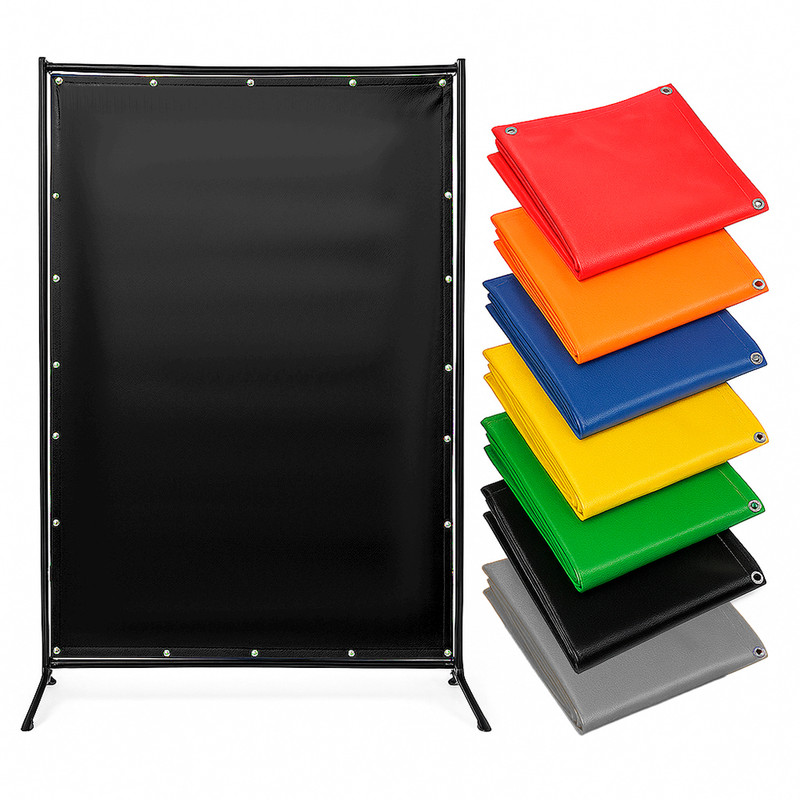
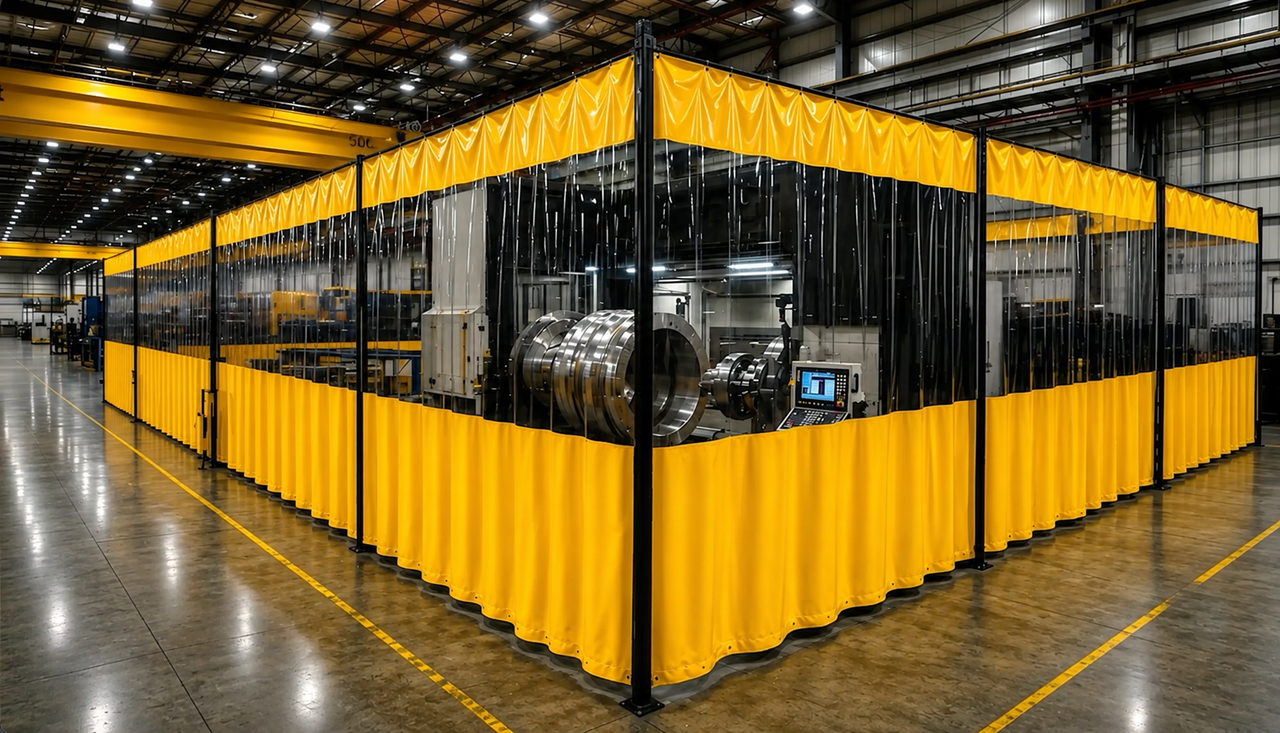
A properly designed protection solution helps reduce direct contact between contaminants and equipment without preventing inspections, adequate ventilation, or maintenance work.
For special applications, custom-designed projects make it possible to adapt dimensions, materials, access points, visibility, ventilation, and mounting locations to the actual conditions of the facility.
Regulatory references and workplace implications
Environments with oil mist and industrial aerosols should be evaluated as part of the company’s occupational risk management process. In Brazil, NR 01 establishes guidelines related to the Risk Management Program, while NR 09 addresses the assessment and control of occupational exposure to physical, chemical, and biological agents.
Depending on the concentration, composition of the agent, and actual exposure conditions, an analysis of the provisions of NR 15 may also be required. When electrical panels, installations, or energized systems are involved, the applicable guidelines of NR 10 must also be observed.
The appropriate measures should be defined based on a technical assessment of the environment, the company’s internal procedures, and guidance from the professionals responsible for occupational health and safety.
Greater predictability for industrial operations
Oil mist should not be treated merely as a cleaning issue. Its continuous deposition can affect performance, reliability, maintenance, safety, and the service life of industrial assets.
By identifying vulnerable areas and implementing targeted solutions, companies can reduce the cumulative effects of contamination and create more predictable conditions for equipment operation, inspection, and preservation.
CIKALA develops barriers, enclosures, and technical structures adapted to the needs of critical industrial environments.
Do you need to reduce the exposure of panels, machinery, sensors, or electronic components to oil mist? Explore the solutions offered by CIKALA or send us the details of your application to develop a custom-designed project.
Frequently asked questions
What is industrial oil mist?
It is an aerosol formed by small droplets of oil or industrial fluid suspended in the air, generally produced by machining, cutting, lubrication, grinding, and spraying processes.
Can oil mist damage electronic equipment?
Yes. Oil deposits can retain dust, compromise heat dissipation, contaminate connectors, and interfere with the operation of sensors, circuit boards, and optical systems.
Does exhaust ventilation completely eliminate microdroplets?
Not always. Efficiency depends on the positioning of the extraction system, airflow, distance from the source, and the geometry of the environment. Some areas may remain exposed to localized deposition.
When should a custom technical barrier be used?
It may be recommended when sensitive assets are located near the emission source, space is limited, frequent access is required, or the application has specific characteristics that standard solutions cannot accommodate.
Location of CIKALA
View the company’s location and plan your contact with the team.
Discover the capabilities of CIKALA
Watch the corporate video to learn more about the company’s solutions and service capabilities.
```
