How to Protect Electrical Panels in Harsh Industrial Environments
Industrial Electrical Panel Protection
Dust, oil mist, metal particles, and moisture can compromise electrical components and reduce operational reliability.
Electrical panels contain essential components for the control, automation, and safety of industrial processes. In harsh environments, contaminants generated by the process can accumulate on sensitive components and create conditions that increase the likelihood of failures.
An effective protection strategy considers not only the panel enclosure, but also actual process conditions, airflow, proximity to contamination sources, and the criticality of the installed equipment.
- Reduced entry and accumulation of contaminants.
- Lower exposure of terminal blocks, relays, PLCs, and electronic boards.
- Greater thermal and operational stability.
- Lower risk of unexpected failures and production downtime.
CIKALA serves industrial applications that require technical assessment of the installation and the development of specific solutions for severe operating conditions.
How contaminants affect electrical panels
Fine particles can penetrate or accumulate inside electrical panels, reaching terminal blocks, contactors, relays, drives, controllers, and electronic boards. Depending on the nature of the contaminant, this buildup can compromise heat dissipation, insulation, and connection reliability.
When dust or metal particles combine with moisture, oil, or condensation, conditions can become even more critical. Adherent or potentially conductive residues can contribute to localized overheating, leakage current, intermittent failures, and short circuits.
Warning signs that deserve attention
- An increase in the frequency of internal panel cleaning.
- Oil residue, dust, or particles on components.
- Intermittent failures involving PLCs, power supplies, relays, or electronic equipment.
- Temperatures above the normal operating history.
- Electrical trips without an evident operational cause.
The panel's nominal IP rating is an important parameter, but a field assessment should also consider continuous exposure, contaminant concentration, ventilation, temperature, vibration, and maintenance routines.
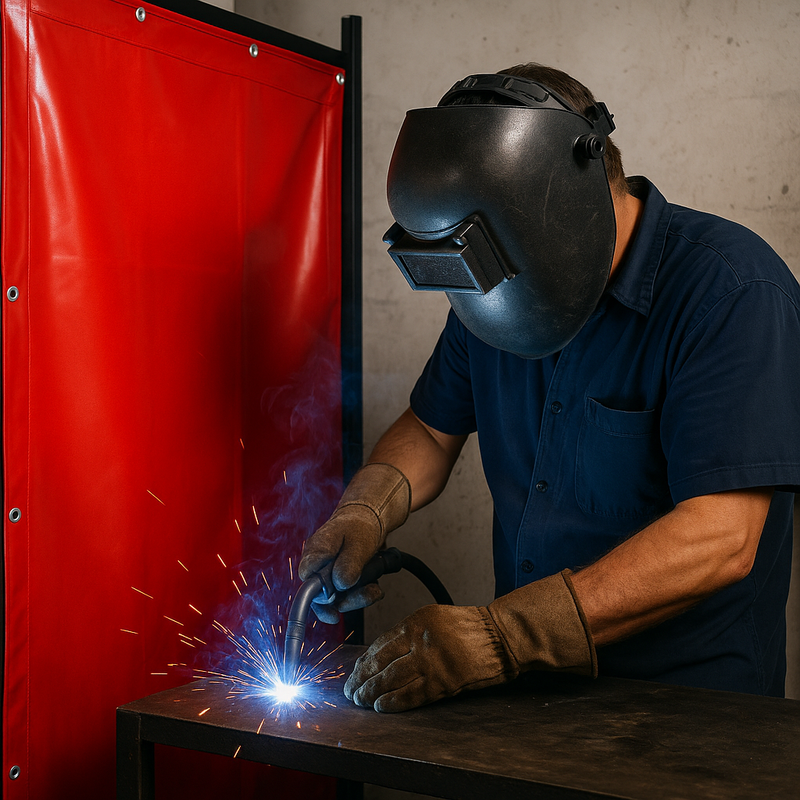
How to identify contamination before a failure occurs
A preventive assessment can begin with simple maintenance indicators. The goal is to identify trends before contamination develops into an operational failure.
Monitor temperature and internal cleanliness
Track the panel's internal temperature and compare records over time. A progressive increase without a proportional rise in load may indicate obstruction, residue buildup, insufficient ventilation, or changing environmental conditions.
Review the history of incidents
- Record how often internal cleaning is required.
- Photograph and document areas where oil, dust, or particles accumulate.
- Correlate electrical failures with specific periods, shifts, and process conditions.
- Inspect filters, seals, cable entries, and ventilation points.
If cleaning frequency, internal temperature, or the number of failures is progressively increasing, the environmental protection strategy should undergo a new technical assessment.
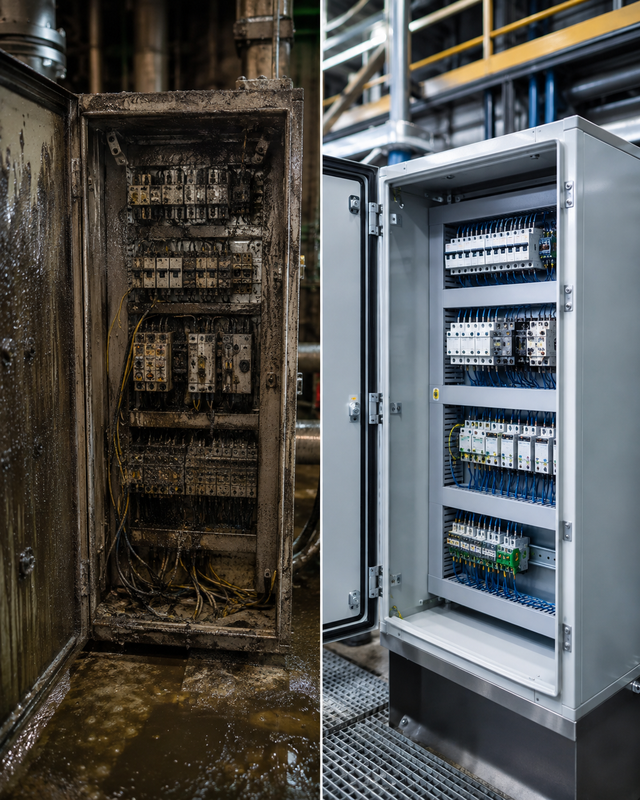
Impact on operational reliability
The effects of a harsh environment are not limited to the component that fails. In automated processes, a localized event can interrupt machines, production cells, or entire production lines, increasing maintenance costs and production losses.
Electrical reliability
Reducing the exposure of sensitive components to dust, oil, particles, and moisture contributes to more stable operation.
Less corrective maintenance
Controlling environmental conditions can reduce emergency interventions associated with contamination.
Greater availability
Reducing unexpected failures helps preserve the continuity of automated processes and critical equipment.
Technical planning
The solution can be designed according to layout, contamination sources, temperature, maintenance requirements, and application criticality.
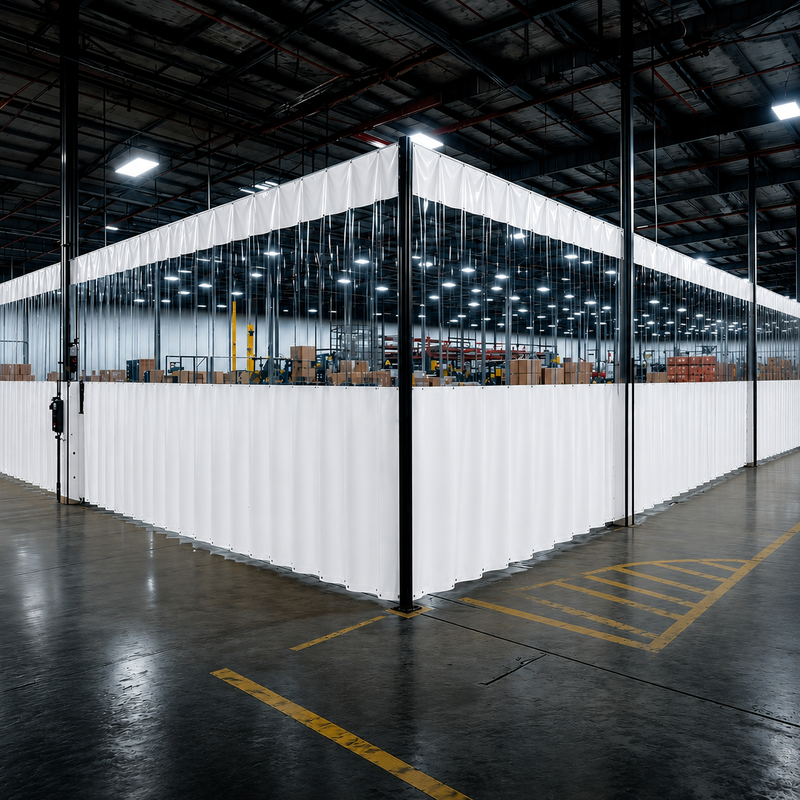
Indicators that help assess panel condition
The table below illustrates how maintenance and performance indicators can reveal important differences between a controlled condition and a critical condition.
| Indicator | Controlled condition | Critical condition |
|---|---|---|
| Internal cleaning interval (months) | 12 | 3 |
| Average internal temperature (°C) | 32 | 48 |
| Electrical failures/year | 0–1 | 4–6 |
| Associated downtime (hours/year) | 2 | 18 |
| Estimated annual cost (BRL) | R$ 8,000 | R$ 120,000 |
Informational and illustrative model only. These values do not replace a specific technical assessment of the installation, process, and actual downtime costs.
Safety and risk management
Installations with electrical panels exposed to contaminants should be assessed according to the applicable workplace safety and risk management requirements.
Standards that may be part of the assessment
- NR 10: safety in electrical installations and electrical services.
- NR 12: workplace safety for machinery and equipment, when applicable to the industrial system.
- NR 01: occupational risk management and the Risk Management Program.
- NR 09: assessment and control of occupational exposure to physical, chemical, and biological agents, when applicable.
- NR 15: unhealthy activities and operations, when conditions meet the criteria established by the regulation.
In addition to compromising process continuity, inadequate conditions can contribute to electrical incidents and hazardous situations. The exact application of these standards depends on the characteristics of the installation, the activities performed, and an assessment by qualified technical professionals.
A protection solution should integrate engineering, operations, and maintenance, avoiding decisions based on a single isolated indicator.
How to define a solution for a critical application
In critical applications, the solution should be selected based on the plant's actual operating conditions. The type of contaminant, distance from the source, particle volume, humidity, temperature, available ventilation, and maintenance access requirements all influence the result.
When an application requires a specific solution, developing a custom-engineered project makes it possible to account for dimensions, physical interferences, operating requirements, and the particular characteristics of the industrial environment.
CIKALA develops solutions for critical industrial environments, taking into account the operational realities of each application and the need to reduce the exposure of sensitive equipment.
If your electrical panel operates near dust, oil, moisture, metal particles, or other sources of contamination, contact CIKALA. You can visit the online store or send details about your application so the team can evaluate a custom-engineered solution.
To speed up the quotation process, send drawings or approximate dimensions, your company's Brazilian CNPJ if applicable, and a brief description of the application. You can also contact the team by email at vendas@cikala.com.br.
Frequently Asked Questions
Is the panel's IP rating sufficient for harsh industrial environments?
The IP rating is an important parameter, but the application should also consider continuous exposure to contaminants, temperature, vibration, ventilation, maintenance, cable entries, and actual process conditions.
What signs indicate that an electrical panel is being affected by contamination?
Increased cleaning frequency, residue on components, rising temperatures, intermittent failures, unexpected trips, and oil or dust buildup are all signs that should be investigated.
How can electrical failures caused by dust and oil mist be reduced?
The solution depends on the conditions of the application. It is important to assess the source and concentration of contaminants, ventilation, sealing, temperature, panel location, and maintenance routine before defining a protection strategy.
When is it worth developing a custom-engineered project?
A specific project is particularly appropriate when there are space limitations, physical interferences, severe contaminants, critical equipment, or operating conditions that cannot be adequately addressed by a standard solution.
CIKALA Location
View the company's location and plan your contact with the team.
Discover CIKALA
Watch the corporate video to learn more about the company's structure and the solutions developed for different industrial applications.

