How Much Does It Cost to Stop a Welding Line Due to an Environmental Failure?
How Much Does It Cost to Stop a Welding Line?
```Failures caused by heat, spatter, and particles can turn small interruptions into accumulated losses in availability, productivity, and operating cost.
```Welding line downtime caused by environmental conditions is among the losses that can go unnoticed in maintenance analysis. The cost is not limited to the time the machine stops producing; it also includes the effects on production flow, personnel, quality, and scheduling.
```In high-throughput environments, small incidents repeated throughout the month can compromise availability, production schedules, and total manufacturing cost. For this reason, controlling the exposure of sensitive components should be part of the line reliability strategy.
- Unproductive time for operators and equipment.
- Corrective maintenance and component replacement costs.
- Rework, scrap, and disruption of the production sequence.
- Accumulated impacts on OEE, delivery deadlines, and logistics.
CIKALA develops solutions for industrial applications that help reduce equipment exposure to heat, spatter, and other agents present in welding processes.
The Cost Goes Beyond Machine Downtime
```When equipment stops operating, the first figure usually considered is machine downtime. However, this indicator represents only part of the total loss. An interruption can create a backlog of parts in upstream operations and a shortage of components downstream, extending the impact to other areas.
In addition, restarting production is not always immediate. Depending on the failure, it may be necessary to diagnose the problem, replace cables, hoses, sensors, or other components, and perform tests before the line can be released for operation again.
Costs That Should Be Included in the Calculation
- Production hours lost during downtime.
- Maintenance labor, troubleshooting, and process restart.
- Replacement parts, consumables, rework, and potential material losses.
A consistent analysis should consider both direct and indirect costs. On production lines with a high hourly operating value, just a few minutes of downtime can quickly exceed the investment required to reduce asset exposure.
Why Welding Environments Accelerate Failures
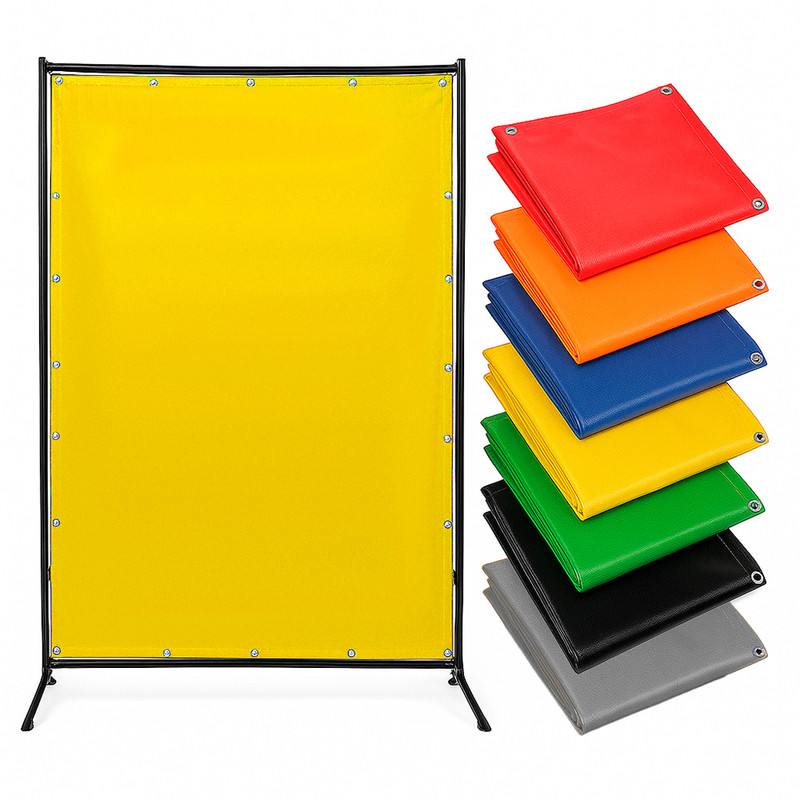
```Welding creates severe operating conditions for many industrial components. Heat, incandescent spatter, particles, and constant movement can accelerate wear on cables, hoses, sensors, robotic systems, and components located near the welding process.
Intermittent Failures Increase Troubleshooting Time
Intermittent short circuits, temporary loss of sensor readings, surface damage to cables, or temperature-related deformation can be especially difficult to identify. Maintenance teams may replace components preventively without eliminating the root cause of the problem.
Signs That the Environment Needs Better Control
- Cables or hoses repeatedly suffer damage near the welding area.
- Sensors and electrical components fail without a clear operating pattern.
- Similar shutdowns continue to occur after corrective replacements.
Applying protection solutions suited to the process can help control exposure, extend component service life, and reduce emergency maintenance interventions.
The Impact on Production Line Availability
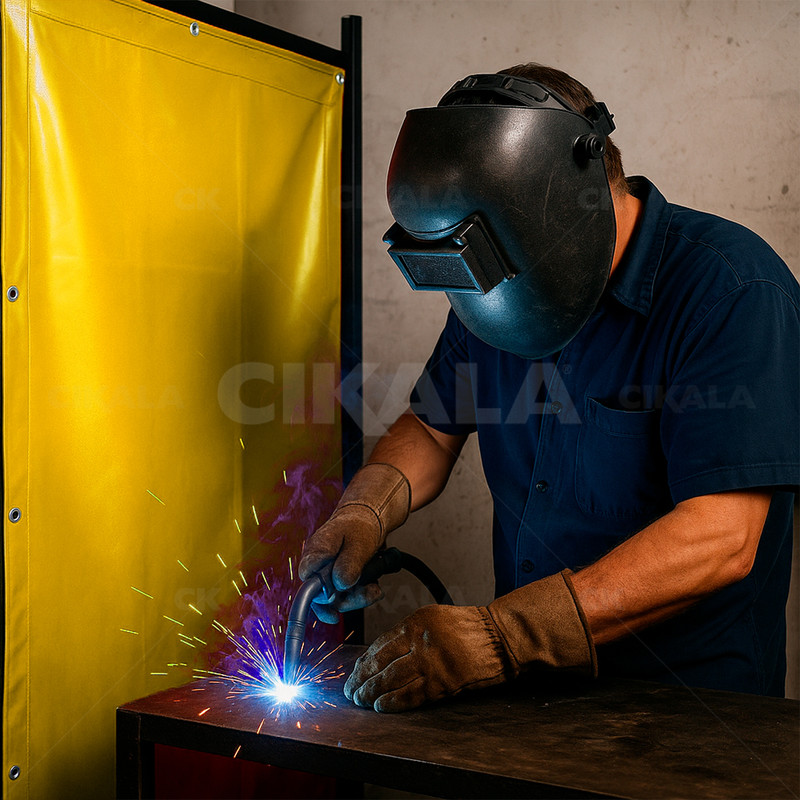
```When environmental causes are identified and addressed in a planned manner, maintenance can move from a predominantly corrective approach to a more predictable routine. The gain does not necessarily come from producing more, but from reducing losses that are already part of the operation.
Higher Availability
Fewer environment-related incidents mean more available production time within the planned schedule.
Less Corrective Maintenance
Reducing the exposure of critical components can decrease emergency replacements and unplanned interventions.
Greater Predictability
A stable production line makes it easier to meet schedules, organize shifts, and plan logistics.
Better Total Cost
Preventing recurring failures reduces hidden expenses related to troubleshooting, rework, scrap, and process restarts.
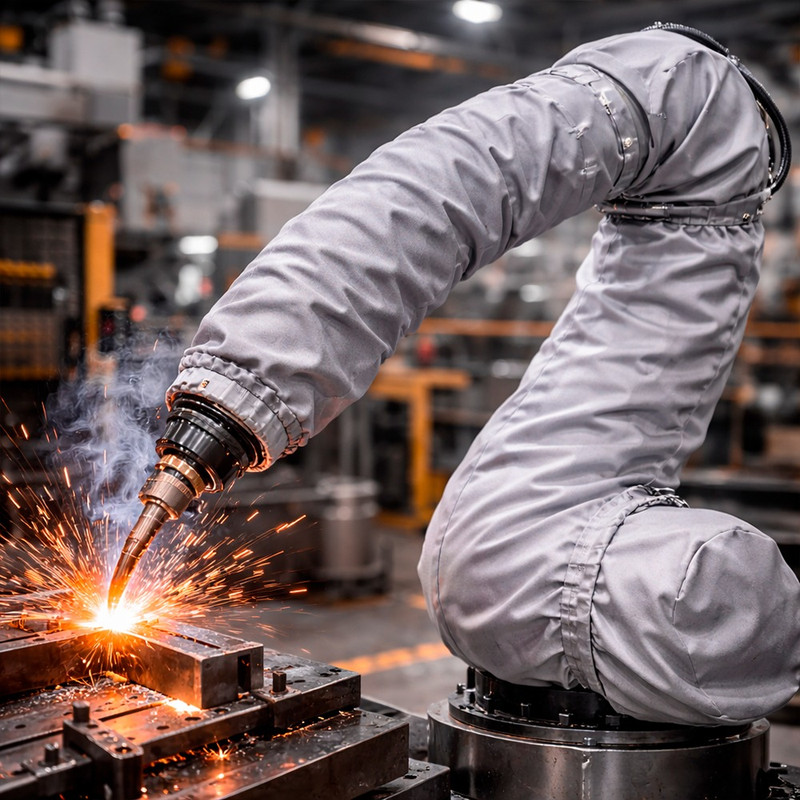
In robotic applications, protection solutions for robot arms, cables, and assemblies located near welding operations can be specified according to geometry, movement, and exposure level.
How to Calculate the Financial Impact of Downtime
```A practical way to begin the analysis is to calculate the approximate hourly cost of downtime and multiply it by the average duration and frequency of incidents. Maintenance, replacement parts, rework, scrap, and impacts on operations that depend on the line should then be added.
If a 30-minute incident occurs four times per month, for example, the operation accumulates two hours of monthly downtime from that type of event alone. On production lines with a high hourly operating cost, eliminating two or three recurring incidents can generate a significant operational return.
The key is to measure the loss as an engineering risk. When heat, spatter, or particles repeatedly appear in root-cause analyses, investing in protection and containment is no longer simply a maintenance expense—it becomes an operational continuity measure.
Reducing Losses Is Also a Productivity Gain
Environmental failures in welding operations can compromise availability, OEE, quality, and delivery performance. When recurring, they turn isolated minutes of downtime into accumulated hours of operational impact throughout the month.
Mapping exposure points, prioritizing critical equipment, and applying solutions compatible with each environment helps increase predictability and reduce dependence on corrective maintenance.
CIKALA supports industrial applications with technical solutions for area isolation, reducing exposure in welding environments, and developing custom projects according to the characteristics of each process.
If your production line experiences recurring damage caused by heat, spatter, particles, or exposure during welding, explore the solutions available in the CIKALA online store. For special applications, robotic cells, or specific requirements, send dimensions, photos, or process information for evaluation of a custom solution.
Speed up your quotation: send your project or approximate dimensions, company registration details, and a brief description of the application to vendas@cikala.com.br or contact us via WhatsApp at +55 (11) 2082-4444.
Technical information provided for reference and subject to validation according to the environment, process, and application.
Frequently Asked Questions
```How much does welding line downtime cost?
The amount depends on the line's hourly operating cost, the duration of the incident, labor involved, replacement parts, rework, and impacts on other production stages. Therefore, the calculation should include both direct and indirect costs.
Which environmental factors most affect welding equipment?
Heat, incandescent spatter, particles, abrasion, and continuous exposure are factors that can accelerate damage to cables, hoses, sensors, electrical systems, and robotic components.
How can recurring failures caused by the welding environment be reduced?
The first step is to identify the root cause and critical exposure points. Barriers, curtains, protective covers, and other solutions compatible with the process can then be implemented.
Can a specific solution be developed for a robotic welding cell?
Yes. Applications with specific geometry, movement, temperature, or exposure conditions may require a custom project. CIKALA can evaluate application information to help identify the appropriate solution.
CIKALA Location
```View the company's location and plan your contact with the team.
```Discover CIKALA
```Watch the corporate video and learn more about the company's structure and the solutions developed for different industrial applications.
```