How Industrial Dust Reduces the Service Life of Automated Equipment
Industrial Dust in Automated Equipment
Microscopic particles can increase wear, compromise precision, and raise the cost of unplanned downtime.
Industrial environments rarely operate under fully controlled contamination conditions. Even when there is no visible residue, microscopic particles remain suspended in the air and continuously circulate around robots, machining centers, automated cells, linear rails, and control systems.
Industrial dust, whether metallic, mineral, polymeric, or organic, acts as a silent abrasive agent. Its effects are usually not immediate but cumulative, interfering with operational durability, mechanical repeatability, and the electronic stability of automated assets.
- Increased friction and wear on moving components.
- Intermittent failures in sensors and electrical connections.
- Reduced MTBF and increased maintenance time.
- Gradual decline in OEE and higher operating costs.
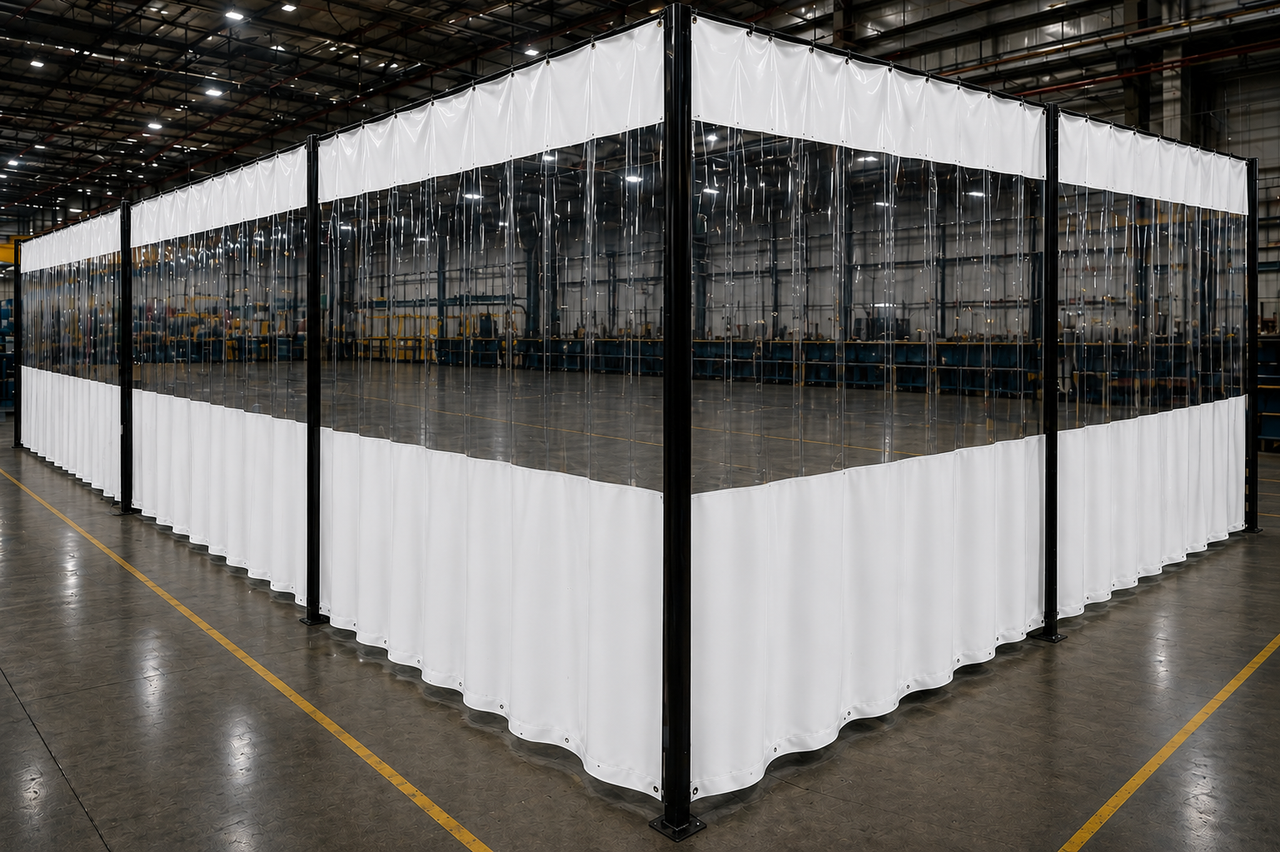
CIKALA develops industrial solutions designed to isolate critical areas, helping reduce the exposure of machines and operators to particles generated during production processes.
How dust reaches automated components
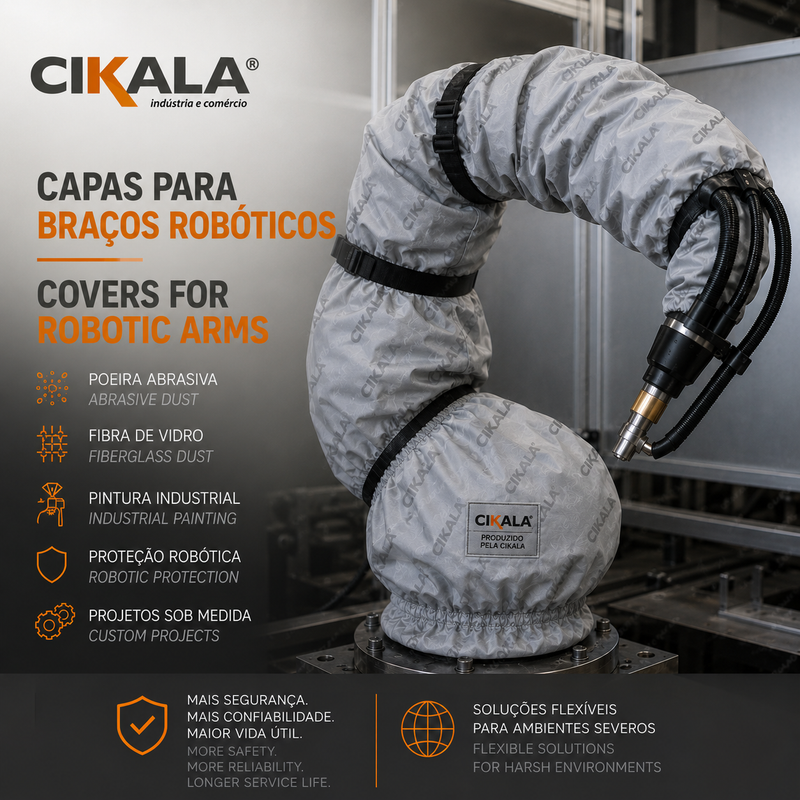
In automated production lines, fine particles can penetrate critical areas such as linear guides, ball screws, bearings, optical sensors, electrical connectors, and control panels. This contamination alters tolerances, increases the coefficient of friction, and compromises dimensional accuracy.
For maintenance engineers, the result often appears as a reduction in MTBF, which represents the mean time between failures, and an increase in MTTR, which refers to the average time required to repair the equipment.
Areas most vulnerable to contamination
- Exposed linear guides, bearings, ball screws, and bushings.
- Optical and inductive sensors and machine vision systems.
- Connectors, electrical panels, and electronic modules.
- Rails, conveyors, robots, and material-handling devices.
The smaller the particle, the greater its ability to reach clearances, seals, and internal surfaces that cannot easily be detected during a conventional visual inspection.
Mechanical, electronic, and operational effects
The impact of industrial dust extends beyond mechanical components. Optical and inductive sensors may experience interference caused by particle buildup, resulting in incorrect readings and intermittent failures that are difficult to diagnose.
Accumulated mechanical wear
When particles come into contact with lubricants, they can form an abrasive mixture that accelerates wear on moving surfaces. The equipment may continue operating, but it begins to develop excessive clearances, vibration, noise, and a gradual loss of repeatability.
Electronic instability and productivity loss
- Interference with sensor and encoder readings.
- Overheating caused by blocked ventilation.
- Oxidation or contamination of electrical contacts.
- Short, recurring stoppages with no immediately identifiable cause.
OEE may begin to decline without an apparent cause. As a result, the team starts working reactively, treating isolated symptoms instead of controlling the environmental source of the problem.
Fine dust, humidity, and oil mist
A common mistake in industrial plants is to classify an environment as low risk simply because there are no heavy chips or large debris. When combined with high relative humidity or oil mist, fine dust can form an adhesive film over mechanical and electronic components.
Abrasion
Accumulated particles increase friction and accelerate wear on moving components.
Adhesive contamination
The combination of dust, oil, and moisture adheres to surfaces and makes conventional cleaning more difficult.
Intermittent failures
Sensors and connections may behave unpredictably, making troubleshooting more difficult.
Loss of precision
Changes in clearances, guides, and measurement systems compromise process repeatability.
The absence of visible residue does not mean there is no risk. Monitoring should consider particle size, composition, airflow, and the interaction of particles with other contaminants.
Estimated impact on operational performance
From the perspective of maintenance, supply chain management, and industrial leadership, the problem is not only technical. Every unplanned shutdown can affect service-level agreements, production schedules, asset availability, and operating margins.
| Indicator | Controlled environment | Dusty environment |
|---|---|---|
| MTBF | 4,200 hours | 1,800 hours |
| Technical interventions per year | 2 | 7 |
| Average OEE | 88% | 72% |
| Annual downtime cost | BRL 40,000 | BRL 210,000 |
| Exposure to nonconformities | Low | High |
The figures shown are illustrative estimates. Results vary according to the process, equipment, particle composition, operating conditions, and maintenance plan.
The cost of contamination should be analyzed through total cost of ownership, considering maintenance, spare parts, unproductive hours, quality losses, delays, and accident risks.
Signs that the environment should be investigated
Dust contamination rarely manifests through a single failure. It usually appears as a combination of recurring events that gradually increase over time.
- Progressive decline in OEE without a significant process change.
- Increase in intermittent sensor failures.
- Frequent recalibration of measurement devices.
- Vibration levels above the equipment's nominal standard.
- Growth in the corrective maintenance history.
- Residue buildup on panels, rails, and moving surfaces.
- Reduced repeatability or dimensional accuracy.
When several of these signs appear simultaneously, the analysis should consider particle flow and contamination entry points, rather than focusing only on the component that failed.
Regulatory references and occupational implications
Environments with a significant presence of industrial dust should be evaluated in the context of occupational risk management and the actual conditions of the production process. Applicable Brazilian references include NR 01, which addresses the Risk Management Program, and NR 09, which covers the assessment and control of occupational exposure.
Depending on the composition and concentration of particulate matter, the conditions established under NR 15 may also apply. When machines and automated systems are involved, the adopted measures must be compatible with the safety requirements of NR 12.
Failures resulting from environmental contamination can contribute to operational accidents, employee leave, productivity losses, and audit nonconformities. The assessment should be conducted by qualified professionals, always considering the current versions of the regulations and the plant's specific characteristics.
Implementing an appropriate protective solution contributes to environmental control, equipment reliability, and the safety of industrial activities.
How to reduce equipment exposure
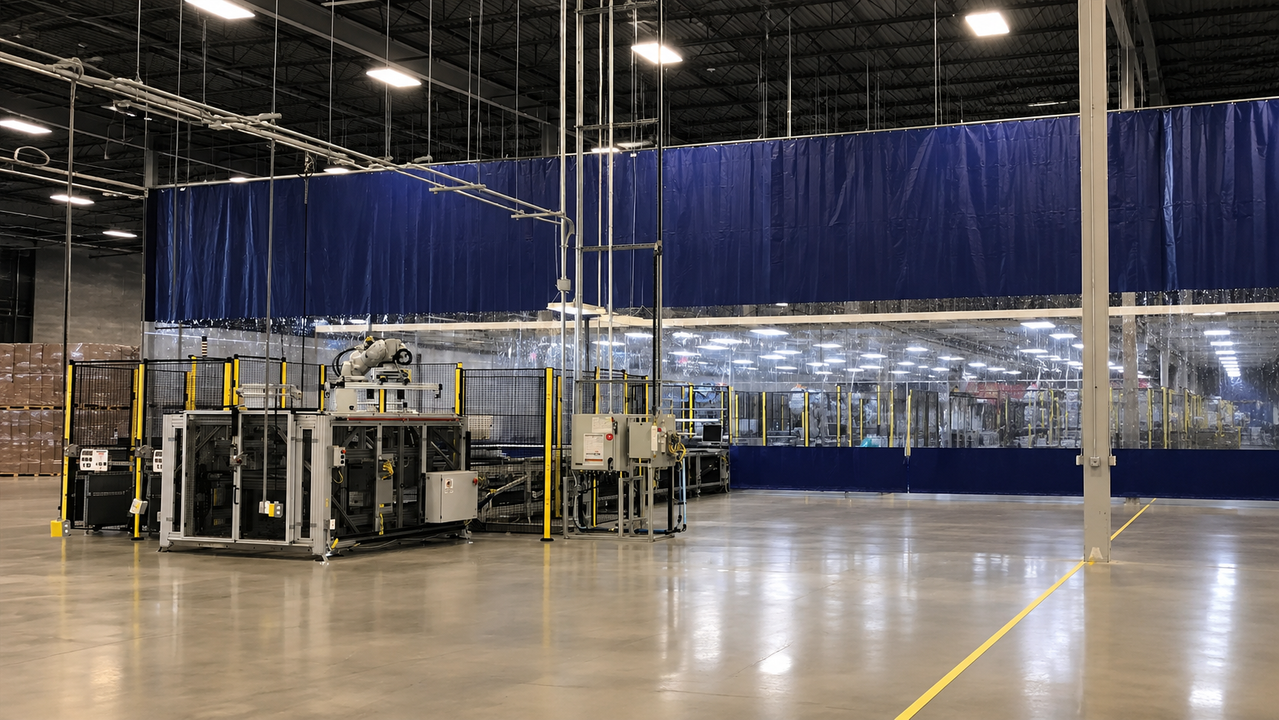
The solution requires analyzing particle flow, mapping critical points, and defining barriers that are compatible with material movement, maintenance access, operator safety, and production routines.
Recommended steps
- Identify the source and predominant direction of the particles.
- Map vulnerable machines, sensors, panels, and components.
- Evaluate access points, circulation, cleaning, and maintenance.
- Define materials compatible with the industrial application.
- Design enclosures, partitions, or barriers according to the layout.
- Monitor maintenance indicators after installation.
Generic solutions may leave gaps, restrict access, or fail to accommodate the specific characteristics of the process. For this reason, critical industrial applications require protection designed according to the dimensions, risks, and operational dynamics involved.
Conclusion
Industrial dust reduces the service life of automated equipment by accelerating mechanical wear, interfering with sensors, contaminating connections, and causing operational instability. Because the effect is cumulative, performance losses may progress for months before being linked to environmental conditions.
Controlling particle dispersion helps preserve components, improve maintenance predictability, reduce unplanned downtime, and lower the total cost of ownership of industrial assets.
CIKALA develops structures, partitions, curtains, and protective solutions for critical industrial environments, considering the layout, operating conditions, and specific risks of each application.
Find solutions for organizing and isolating industrial areas in the CIKALA online store. For automated cells, machinery, special production lines, or environments affected by particulate contamination, send your project details or approximate measurements through WhatsApp and request a custom solution.
Frequently asked questions
How does industrial dust reduce machine service life?
Particles increase friction, contaminate lubricants, block ventilation systems, and interfere with sensors and connections. These effects accelerate wear and increase the frequency of failures.
Which types of equipment are most sensitive to contamination?
Robots, machining centers, optical sensors, electrical panels, linear guides, ball screws, bearings, conveyors, and machine vision systems are among the most vulnerable components.
Can fine dust cause failures without visible buildup?
Yes. Microscopic particles can penetrate clearances, seals, connectors, and internal components without forming buildup that can easily be detected during a visual inspection.
How should an industrial isolation solution be selected?
The selection process should consider the source of the particles, airflow, layout, access points, cleaning routines, material movement, and process safety requirements.
Location of CIKALA
View the location and contact channels to learn more about the solutions available for industrial applications.
Discover the industrial solutions from CIKALA
Watch the corporate video and discover the experience, infrastructure, and service possibilities available for different industrial needs.

