Technical Area Isolation: Why It Is Essential in Data Centers
Isolation of Technical Areas
Protection against dust and particles in Data Centers during construction, maintenance, and expansion work.
Data Centers are environments designed to operate with maximum reliability and availability. In these spaces, servers, storage systems, network equipment, and support infrastructure must run continuously to ensure the stability of business operations.
```However, activities such as construction, expansions, maintenance, and technical upgrades can pose significant risks. Dust, airborne particles, and debris generated during these interventions can compromise sensitive equipment and increase the risk of failures.
- Reduced contamination from dust and debris
- Protection for critical equipment and sensitive infrastructure
- Operational continuity during technical interventions
- Temporary and custom-made solutions for each environment
CIKALA provides solutions for containment, isolation, and protection of technical areas, helping companies keep critical operations safe even during construction or maintenance periods.
What is technical area isolation?
```Technical area isolation consists of creating physical barriers that separate work zones from areas that remain operational. The goal is to prevent dust, particles, and debris from spreading into spaces that contain critical equipment.
This practice is especially important in Data Centers, server rooms, hospital environments, and other spaces that require a high level of operational control. By creating effective separation, work can be carried out more safely and with less impact on the infrastructure’s operation.
When is this solution usually applied?
- Internal construction work, renovations, and infrastructure expansions
- Installation of new equipment, cabling, and electrical systems
- Building maintenance or emergency technical adjustments
In technical and customized projects, the best results usually come from a custom-made solution designed according to the layout, criticality level, and operational routine of the site.
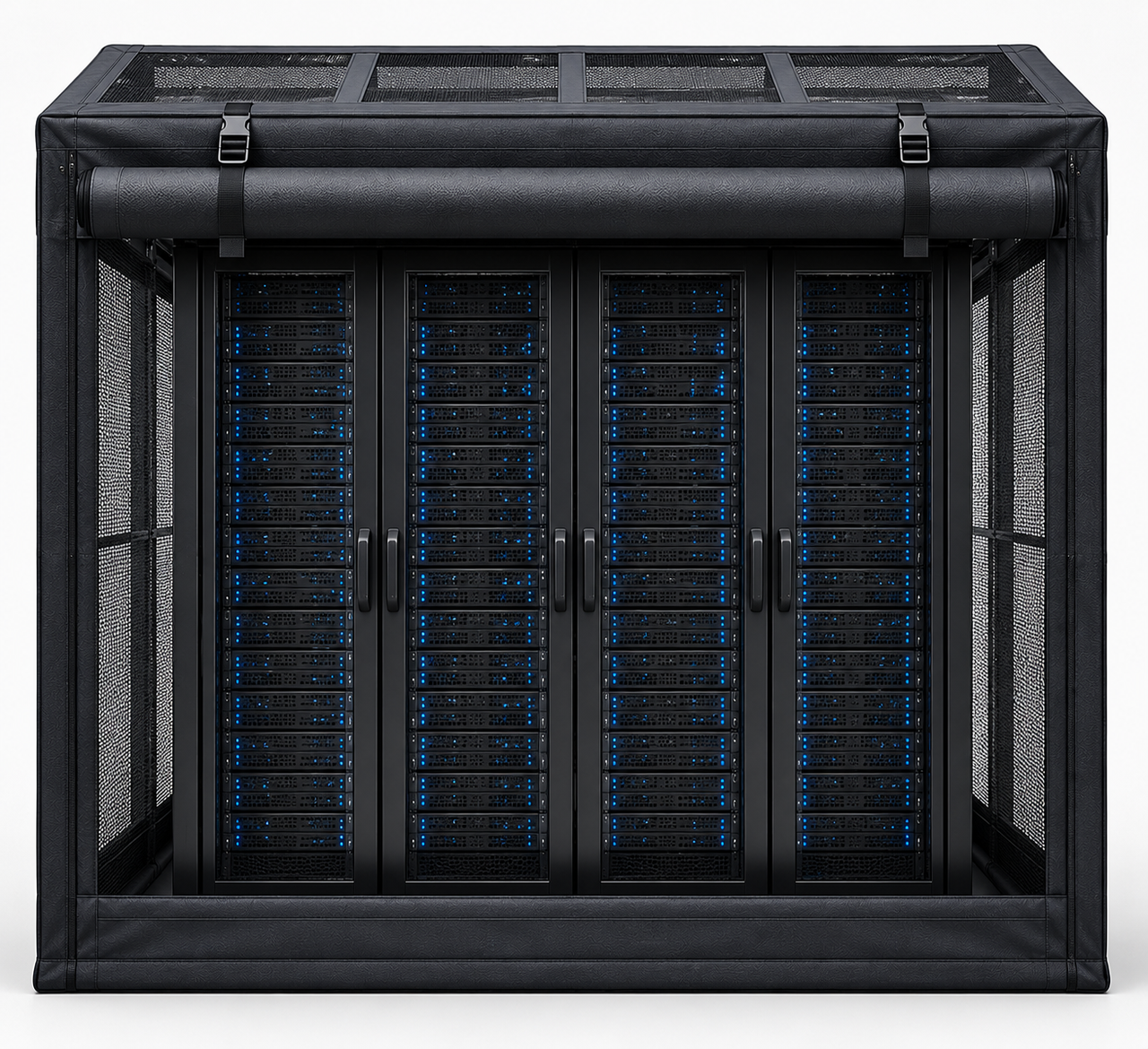
Why is dust control so important in Data Centers?
```Equipment inside Data Centers is highly sensitive to environmental contamination. Even small amounts of particles can affect airflow, increase operating temperature, and impair the performance of electronic components.
How does dust affect equipment?
When filters, fans, and air inlets become obstructed, heat dissipation becomes less efficient. As a result, servers, storage units, switches, electrical panels, and cooling systems become more exposed to overheating and accelerated wear.
Main risks during technical interventions
- Operational failures caused by contamination of sensitive components
- Increased corrective maintenance and reduced asset lifespan
- Impacts on system availability and environmental performance
By investing in proper containment barriers and protection, companies reduce operational risks and preserve the reliability of the Data Center throughout the entire intervention period.
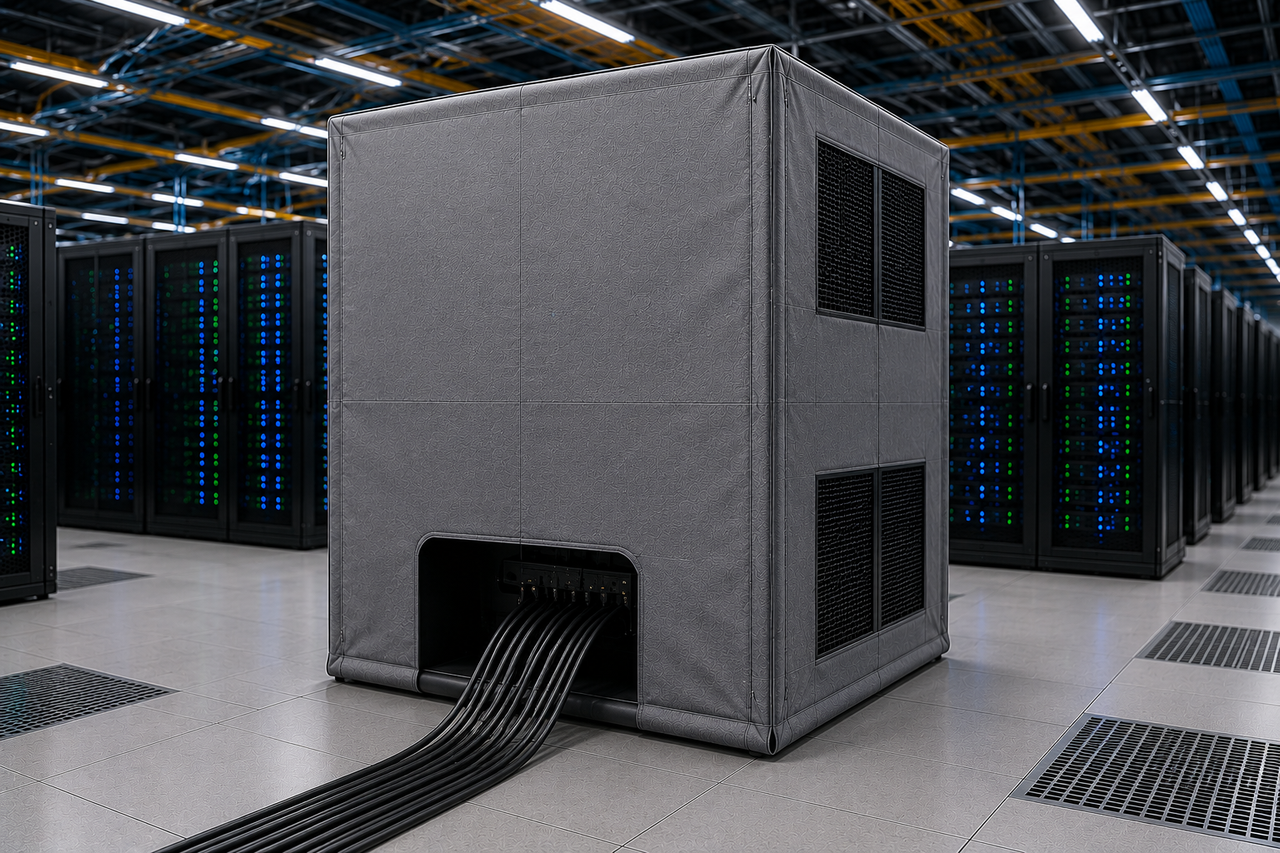
What solutions can be used for technical isolation?
```There are different solutions for isolating technical areas, and the ideal choice depends on the type of activity, execution time, proximity to critical equipment, and the need for team circulation. In many cases, combining more than one measure increases the operation’s safety level.
Containment barriers
They physically define the intervention area and help prevent dust and debris from spreading into operational environments.
Technical curtains
They allow temporary partitions to be created efficiently, controlling particles without making access difficult for the teams responsible for the work.
Temporary enclosures
These are recommended for activities that require a higher level of isolation and containment, especially in highly critical locations.
Protective covers and enclosures
They protect racks, servers, and other assets during specific interventions, reducing direct exposure to contaminants.
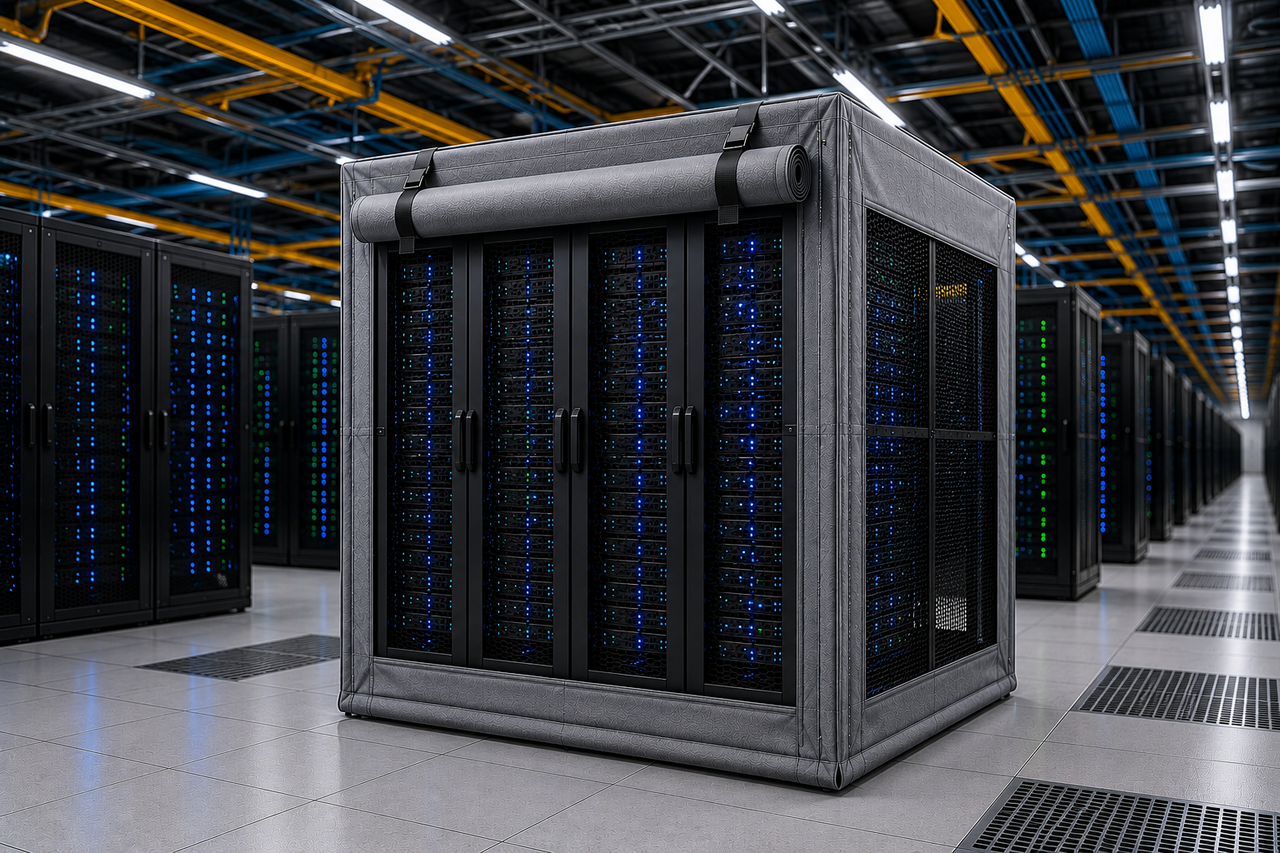
How to plan effective isolation?
```Effective isolation starts before the work begins. It is essential to assess the area that will be isolated, the type of intervention, its duration, nearby equipment, and the criticality level of the operation. This planning helps define the most suitable materials and methods.
In addition, operational continuity depends on a strategy that combines particle containment, safe access for teams, and protection for the most sensitive assets. In mission-critical environments, a custom-made solution is often the most efficient way to reduce risks.
CIKALA develops solutions for technical area isolation, particle containment, and equipment protection in critical environments, with options tailored to construction work, renovations, expansions, and controlled maintenance.
If your operation requires dust control, safety for sensitive equipment, and a technical solution aligned with your environment, CIKALA can support you with both ready-to-use options and custom-made projects. For more technical, industrial, or personalized applications, it is worth speaking with the team on WhatsApp to define the best solution for your project.
Frequently asked questions
```Is technical area isolation only recommended for large construction projects?
No. It can also be applied to small maintenance jobs, infrastructure installations, electrical upgrades, and specific interventions that generate dust or debris near sensitive equipment.
Which environments besides Data Centers benefit from this solution?
Server rooms, hospitals, laboratories, telecommunications centers, automated industrial environments, and control centers can also benefit from technical isolation.
Do temporary barriers really help protect equipment?
Yes. When properly specified, they reduce particle dispersion, help control the environment, and strengthen asset protection during interventions.
When is it worth investing in a custom-made solution?
When the environment has a high level of criticality, a specific layout, controlled access requirements, or technical conditions that call for a personalized project to improve efficiency and operational safety.

