How to Weld PVC Tarpaulin with a Heat Gun: Complete Step-by-Step Guide
How to Weld PVC Tarpaulin
Learn about the tools, settings, and precautions needed to create strong, uniform seams with a professional finish.
Welding PVC tarpaulin is an important process for manufacturers and professionals who work with awnings, covers, banners, industrial curtains, geomembranes, transport tarps, and many other products made from thermoplastic materials.
When performed correctly, the technique provides strong seams, good sealing, a uniform finish, and greater durability. To achieve this, it is essential to combine a suitable heat gun, proper temperature control, and consistent pressure application.
- Understand how the thermal bonding of PVC tarpaulin works;
- Learn which tools are required for the process;
- Discover how to control heat, pressure, and speed;
- Avoid mistakes that can compromise seam strength.
CIKALA develops solutions for professional applications and special projects, including rollers and components that help improve control, finish quality, and productivity when joining technical tarpaulins.
What is PVC tarpaulin welding?
PVC tarpaulin welding consists of joining two thermoplastic surfaces through the controlled application of heat and pressure.
During the process, the heat gun directs hot air to the seam area. The heat softens the surface layers of the PVC and allows them to be joined by compression. After cooling, the material regains its rigidity and forms a strong bond.
How is the bond formed?
- The surfaces are cleaned, dried, and positioned correctly;
- Heat is applied continuously and evenly;
- Pressure brings the heated layers together and removes air pockets;
- Cooling stabilizes the seam and restores the PVC's strength.
The result depends on the balance between temperature, travel speed, and pressure. Changing one of these factors without compensating for the others can produce a weak, deformed, or irregular seam.
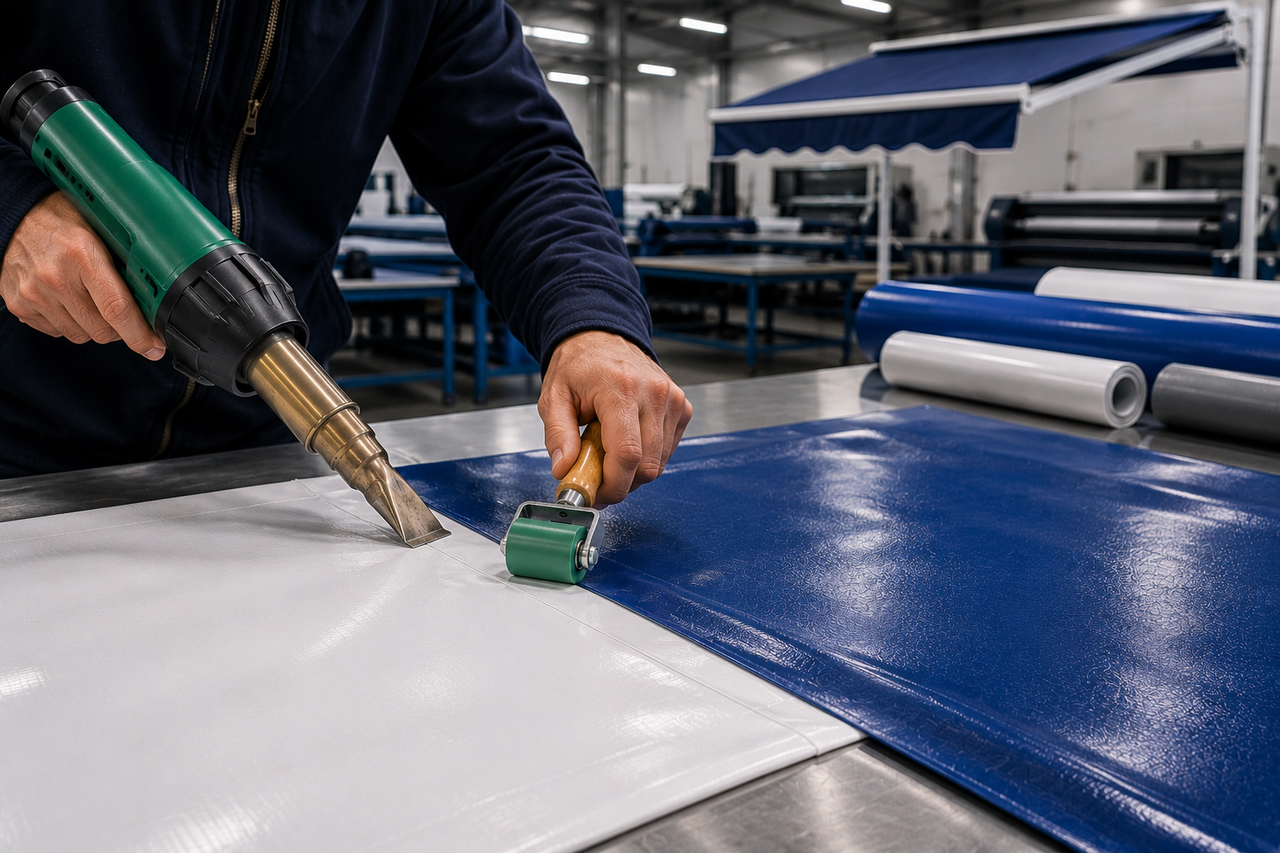
Tools needed to weld PVC tarpaulin
Before starting the job, organize the work area and use equipment compatible with the thickness, coating, and final application of the tarpaulin.
Hot air heat gun
The heat gun should provide proper temperature and airflow control. Stable equipment helps maintain uniform heating לאורך the entire seam.
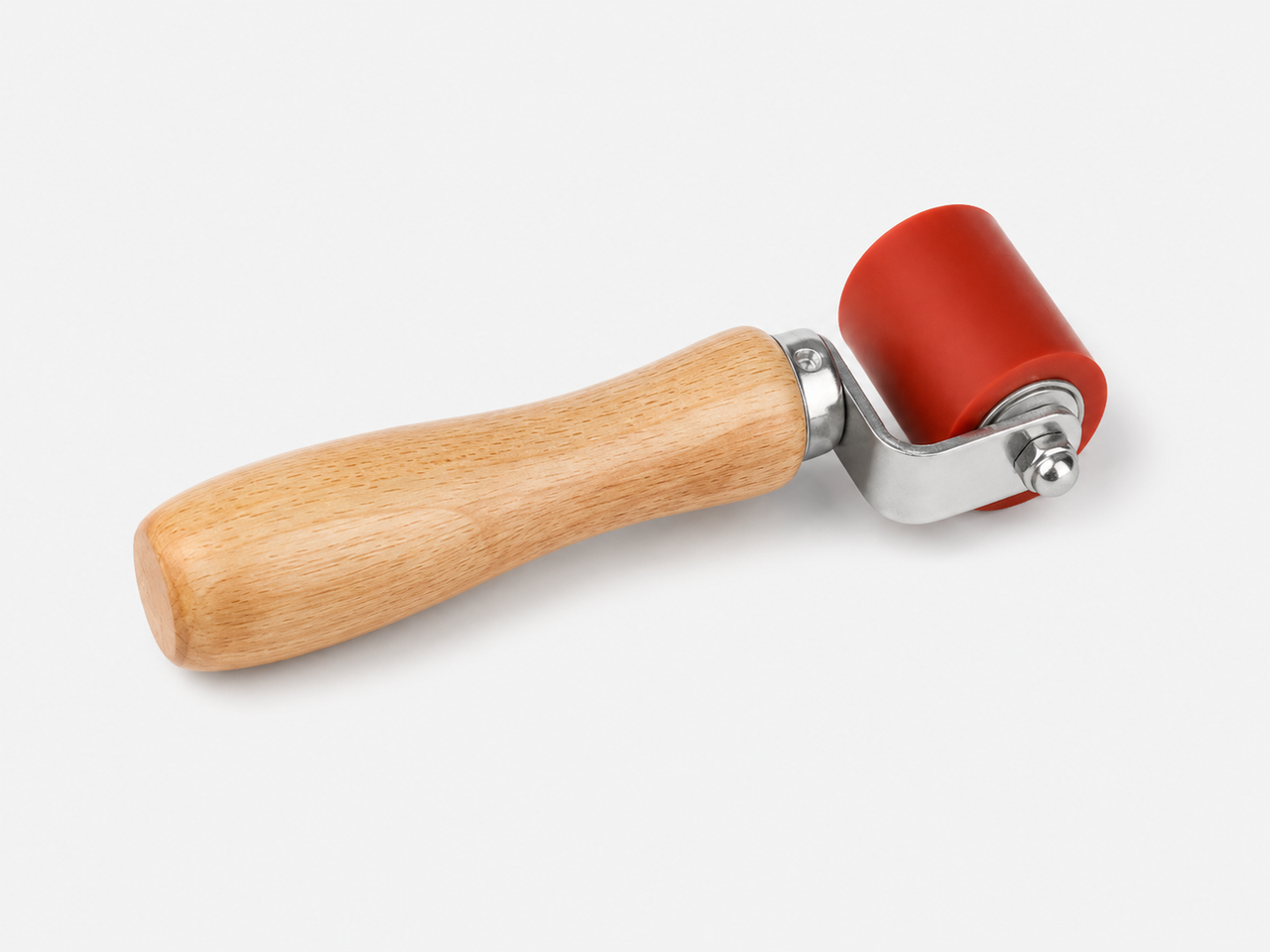
Pressure Roller or silicone roller
The Pressure Roller is used immediately after heating. Its function is to compress the surfaces, distribute the applied force, and help form a uniform seam.
Other recommended items
- Flat, firm, and level worktable;
- Ruler, guide, or marking tool to maintain alignment;
- Clean cloth and compatible product for surface preparation;
- Gloves, safety glasses, and other personal protective equipment;
- Scrap pieces of the same material for preliminary tests.
Perform a test on a sample before working on the final piece. This practice allows you to adjust temperature, speed, and pressure without compromising the main material.
How to weld PVC tarpaulin correctly
The procedure may vary depending on the type of tarpaulin, coating thickness, heat gun power, and ambient conditions. However, some steps are essential to achieve a consistent result.
1. Prepare and align the surfaces
Make sure both parts are clean, dry, and free from dust, oil, moisture, or residue. Any contamination can prevent proper bonding between the layers.
Position the pieces on a level surface and define the overlap width. Use a ruler or guide to prevent movement during the operation.
2. Adjust the heat gun temperature
The temperature should be set according to the characteristics of the tarpaulin and the equipment manufacturer's recommendations. Start with a test and observe how the PVC behaves.
Insufficient temperature can result in poor adhesion. Excessive heat can cause irregular gloss, wrinkling, color changes, coating burn, or tarpaulin deformation.
3. Heat the seam area
Position the heat gun nozzle between the two layers and move the tool continuously. Keep the distance, angle, and speed regular throughout the entire path.
The area should receive enough heat to become pliable, but it must not show signs of degradation.
4. Apply pressure immediately
Right after heating, roll the Pressure Roller over the seam. Work close to the hot air exit point to compress the material while it is still pliable.
Maintain constant pressure and a uniform movement. Avoid stopping the roller on a single point, as this can mark or shift the tarpaulin.
5. Allow it to cool
After completing the seam, let the material cool naturally. Do not fold, pull, or subject the area to stress before the PVC regains its stability.
6. Test the strength
After cooling, perform a visual inspection and a moderate tensile test. Check for adhesion failures, bubbles, channels, loose areas, or finish differences.
Main mistakes during welding
Even experienced professionals may face difficulties when the equipment, material, or process parameters are not correctly adjusted.
Inadequate temperature
Insufficient heat reduces adhesion. Excessive temperature can burn, deform, or alter the appearance of the PVC.
Irregular pressure
Applying too little force or varying pressure during the pass can leave bubbles, channels, and unbonded spots.
Incorrect speed
Moving the heat gun too quickly reduces heating. Working too slowly increases the risk of overheating.
Contaminated surface
Dust, moisture, oil, and residue impair contact between the layers and can cause premature seam failure.
Process repeatability improves when the operator records the settings used for each material, including temperature, airflow, seam width, and travel speed.
Where is this technique used?
Thermal joining of PVC tarpaulin is present in different industrial, commercial, and maintenance activities. The method is especially useful when the application requires strength, a continuous finish, or reduced passage points for water and air.
- Manufacturing and maintenance of awnings;
- Production of banners and visual communication materials;
- Tarpaulins for trucks, trailers, and road equipment;
- Industrial curtains and flexible partitions;
- Technical covers and custom-made pieces;
- Geomembranes and waterproofing systems;
- Reservoirs and flexible structures;
- Localized repairs on PVC-coated tarpaulins.
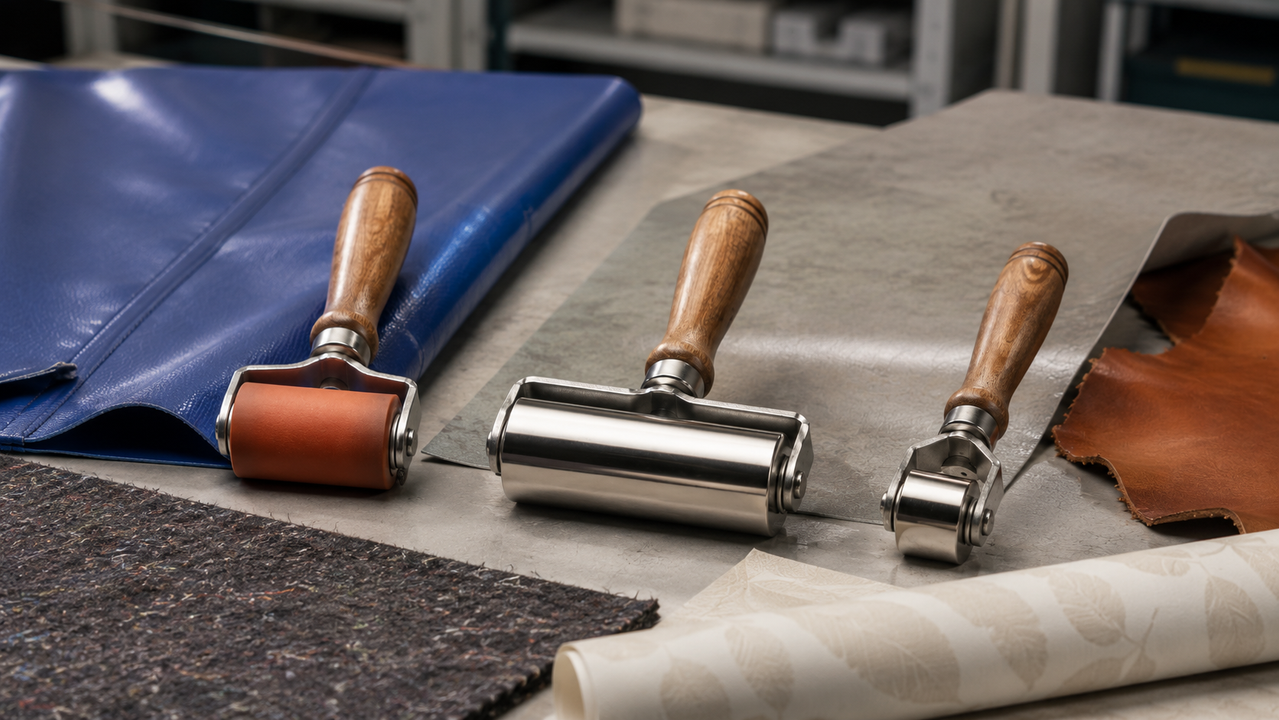
In special projects, the roller's shape, material, and hardness can be adapted to the geometry of the part and the process conditions. CIKALA can evaluate specific applications and develop custom alternatives.
Why is the Pressure Roller important?
The Pressure Roller is one of the main factors responsible for seam consistency and strength. It transforms the force applied by the operator into effective contact between the heated surfaces.
When the roller has the right dimensions, material, and hardness, pressure is distributed more evenly. This helps reduce bubbles, marks, loose areas, and finish variations.
Benefits of using the right roller
- Better pressure distribution;
- Greater control during manual operation;
- Reduced air pockets and contact failures;
- More uniform finish;
- Greater repeatability across different pieces;
- Less need for rework.
Why choose quality tools?
Proper tools provide greater precision, ergonomics, and productivity. In repetitive operations, differences in handle design, bearing quality, roller width, and contact material can directly affect operator comfort and seam consistency.
For companies that perform this type of work every day, investing in reliable components helps reduce downtime, rework, and tarpaulin waste.
Before choosing the roller, consider the seam width, surface type, working temperature, required pressure, frequency of use, and any access limitations to the part.
Conclusion
Knowing how to weld PVC tarpaulin correctly makes a difference in the strength, appearance, and durability of the final product. Surface preparation, heat gun adjustment, travel speed, and pressure application must work in balance.
Using an appropriate Pressure Roller helps improve contact between heated layers, reduce imperfections, and increase process productivity.
At CIKALA, you will find solutions developed for professional applications involving tarpaulins, banners, awnings, and technical materials, along with the possibility of developing components according to your process needs.
Need a roller to improve seam finishing, or do you have an industrial application with specific dimensions, materials, or operating conditions? Explore the solutions from CIKALA or contact the team via WhatsApp to discuss a custom project.
Frequently asked questions
Can I weld PVC tarpaulin using only a heat gun?
The heat gun provides the necessary heat, but using a Pressure Roller is highly recommended. Pressure helps bond the heated layers, eliminate air pockets, and produce a more uniform seam.
Can every PVC tarpaulin be welded with heat?
Many thermoplastic tarpaulins can be joined with hot air, but compatibility depends on the material composition, coating, and thickness. Follow the manufacturer's guidelines and run tests before working on the final piece.
Which tool improves seam finishing?
The Pressure Roller, especially when coated with a material suitable for the application, helps distribute force, reduce bubbles, and improve finish consistency.
Is welding stronger than stitching?
In many applications, thermal bonding can provide excellent strength and sealing. Final performance depends on the material, preparation, parameters used, and the product's mechanical requirements.

