Fine Particle Contamination in Industrial Sensors: Impacts, Risks, and Protective Solutions
Fine Particles in Industrial Sensors
```Learn how microscopic deposits can compromise readings, heat dissipation, and reliability in automated processes.
```Industrial sensors operate with high precision and depend on clean surfaces to ensure reliable readings. Microscopic particles can adhere to lenses, emitters, connectors, and internal components, altering detection fields and causing intermittent failures that are difficult to diagnose.
```Contamination is not always externally visible. Inside the equipment, however, progressive accumulation can compromise the stability, repeatability, and service life of electronic systems used in industrial environments.
- Reduced clarity in optical sensors.
- Reading variations in detection devices.
- Partial blockage of ventilation openings.
- Increased need for corrective interventions.
CIKALA develops barriers and protective solutions suited to the characteristics of critical industrial environments.
How fine particles affect industrial sensors
```In environments with high particulate loads, optical sensors may lose clarity due to residue deposits on lenses, emitters, or receivers. Even a seemingly small layer can change signal intensity and generate unstable readings.
Inductive sensors and other detection devices may also show variations when contamination accumulates in the sensing area or interferes with the expected operating conditions. The result may be a sequence of intermittent failures that are difficult to reproduce during maintenance.
Warning signs that deserve attention
- Different readings under similar operating conditions.
- False triggers or delays in detection.
- An increasing need for cleaning and recalibration.
When the problem returns soon after maintenance, it is important to evaluate not only the sensor but also the rate at which particles are deposited in the environment.
Moisture, heat buildup, and electronic failures
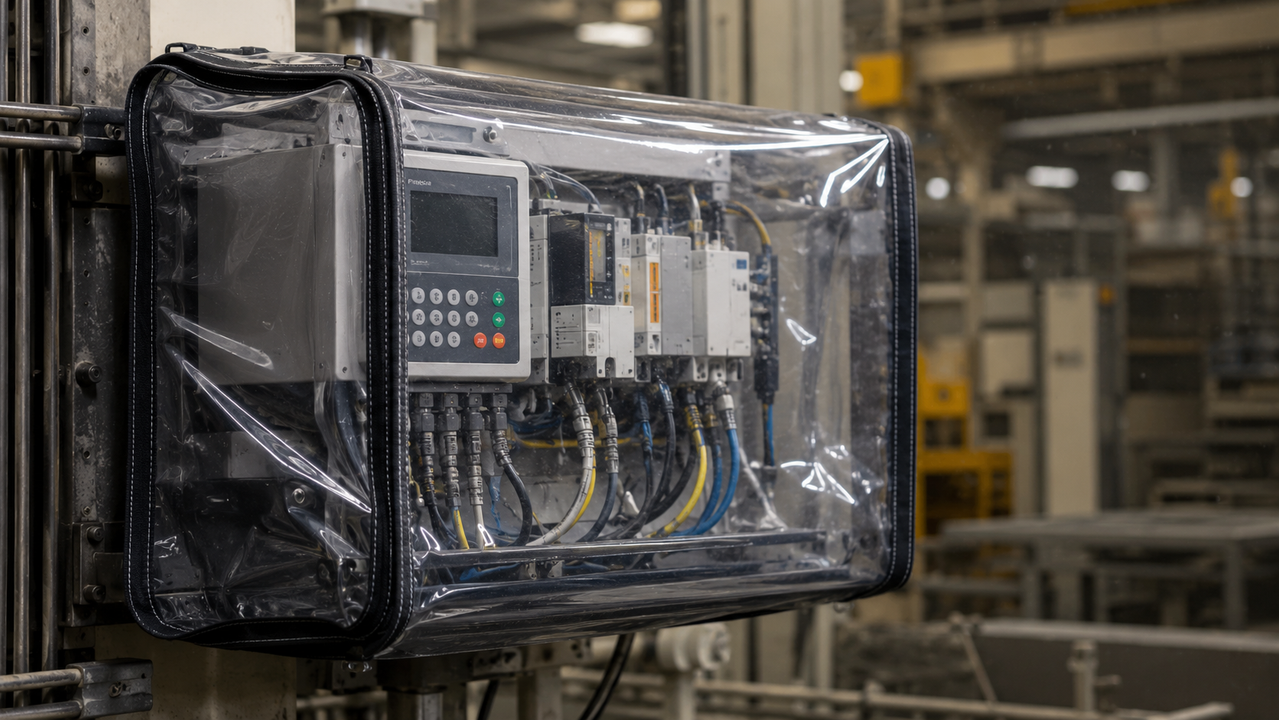
```When fine particles come into contact with moisture, industrial mist, or process residue, they can form denser and more adhesive deposits. These deposits make cleaning more difficult, obstruct ventilation areas, and reduce heat dissipation from electronic modules.
Effects on heat dissipation
Partial blockage of air inlets, heat sinks, and heat-transfer surfaces can increase operating temperatures. This localized heating places additional stress on circuit boards, power supplies, connectors, and sensitive components.
Consequences for automated processes
- Incorrect readings and loss of repeatability.
- Unexpected shutdowns or false activations.
- Loss of synchronization between process stages.
The combination of particulate matter, moisture, and heat can accelerate system degradation, even when the equipment appears to be in normal condition externally.
Why periodic cleaning alone may not solve the problem
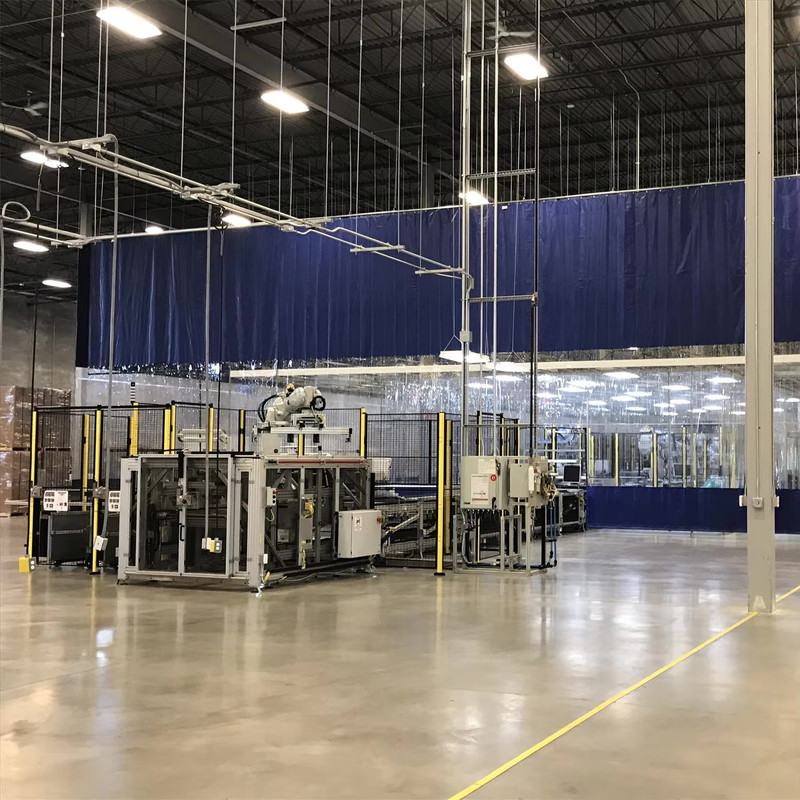
```A common mistake is relying exclusively on cleaning routines. In many operations, the deposition rate is higher than the maintenance frequency, resulting in a continuous contamination cycle.
In these cases, cleaning temporarily removes the effects but does not control the source or movement of the particles.
Fewer recurring problems
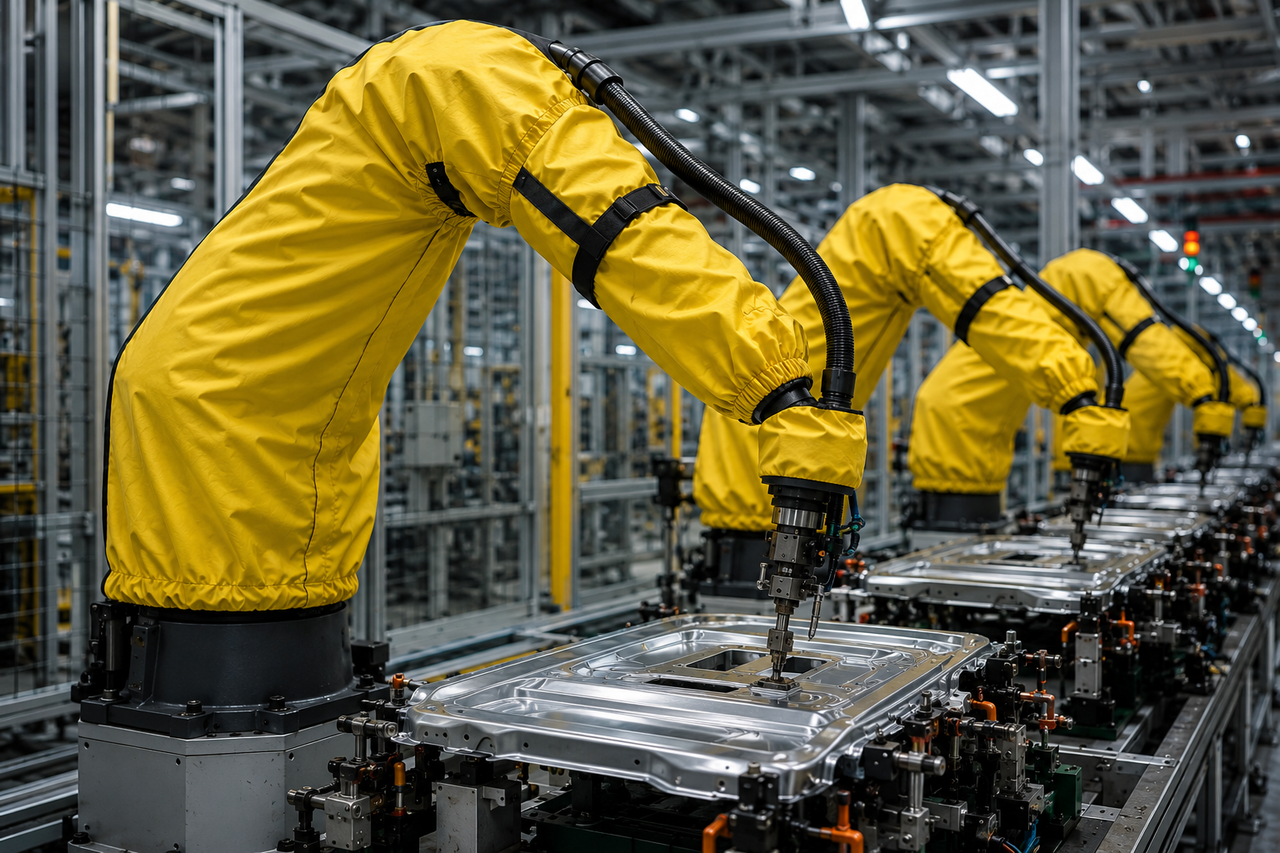
Proper physical barriers help reduce the number of particles reaching sensitive areas.
Greater stability
Reducing buildup supports more consistent readings throughout the operation.
Planned maintenance
Environmental control reduces dependence on emergency interventions.
Longer service life
Less exposed equipment tends to operate with lower thermal and mechanical stress.
Technical barriers and environmental analysis
```The selection of a barrier should consider the source of the particulate matter, airflow, the movement of people and equipment, access requirements, process temperature, and maintenance frequency.
Targeted technical protection may include physical separations, industrial curtains, enclosures, partitions, or other solutions compatible with the layout and operating routine.
Important information for defining the solution
- Approximate dimensions of the area or equipment.
- Type and source of the particles present in the environment.
- Requirements for the passage of people, machines, or materials.
- Temperature, humidity, and other application conditions.
The more detailed the application analysis, the greater the ability to develop a solution compatible with the process and existing maintenance procedures.
Regulatory references and workplace implications
```Environments with airborne particles should be assessed in accordance with NR 01, within the context of the Risk Management Program, and NR 09. Depending on the nature of the particulate matter and exposure conditions, the situations covered by NR 15 may also apply.
When sensors and electronic systems are integrated into machinery and equipment, the applicable guidelines of NR 12 should also be observed. The definition of the required measures depends on a technical assessment of the actual working conditions.
The adoption of technical solutions contributes to the mitigation of operational risks and supports alignment with safety and compliance practices, reducing exposure to failures, administrative penalties, and labor liabilities.
How to improve equipment reliability
```Controlling the exposure of sensitive components is an important measure for reducing recurring failures. The strategy should combine inspection, cleaning, preventive maintenance, and physical protection suited to the environment.
In critical applications, generic solutions may not meet the required dimensions, access needs, or contamination intensity. For this reason, assessing operating conditions is essential for defining the appropriate materials, design, and installation.
CIKALA develops custom-made solutions for critical industrial environments, taking each customer's operational conditions into account.
To reduce the entry of particles into sensors, control panels, and electronic equipment, rely on CIKALA. Send your project or approximate measurements, your company's registration details, and a brief description of the application to vendas@cikala.com.br or contact us through WhatsApp.
CIKALA solves it.
Frequently asked questions
```How do fine particles interfere with sensors?
They can settle on lenses, emitters, receivers, and sensing areas, altering signals and causing unstable measurements, false triggers, or loss of repeatability.
Is periodic cleaning enough to prevent failures?
Not always. When deposition occurs rapidly, the equipment becomes contaminated again before the next maintenance cycle. In these cases, it is also necessary to control the entry and circulation of particles.
Why does moisture make contamination worse?
Moisture and industrial mist can turn loose particles into denser deposits that adhere to components, restrict ventilation, and increase localized heating.
When is a custom-made solution recommended?
It is recommended when the equipment, layout, access points, or process conditions require specific dimensions and materials. An application assessment makes it possible to develop a barrier that is better suited to the environment.
Location of CIKALA
```View the company's location and use the map to plan your route.
```Learn more about CIKALA
```Watch the corporate video and learn more about the solutions available for commercial and industrial applications.
```
