How Dust Affects Data Centers and How to Protect Critical Equipment
How Dust Can Compromise Data Center Operations
Learn why particle control is essential to protect servers, cooling systems, and operational continuity in critical environments.
Data Centers are responsible for storing, processing, and distributing essential information for companies across a wide range of industries. The availability of these environments is crucial to ensure business continuity, prevent financial losses, and maintain data security.
However, one of the most underestimated risks in these environments is the presence of dust and airborne particles. Even in controlled facilities, contamination can occur during maintenance, renovations, expansions, or simply through the movement of people and equipment. Understanding how dust affects the infrastructure is essential to implement effective protection measures and preserve operational reliability.
- Dust can affect servers, switches, storage systems, and cooling systems
- Airborne particles increase the risk of failures and downtime
- Construction work and maintenance significantly raise contamination levels
- Preventive solutions help protect assets and maintain operational continuity
CIKALA develops solutions for protection, isolation, and covering of technical areas, helping companies reduce operational risks in mission-critical environments.
Why does dust pose a risk to Data Centers?
The equipment used in Data Centers is highly sensitive. Servers, switches, storage systems, and cooling units rely on clean environments to operate at maximum efficiency.
When dust particles accumulate on components, several operational problems can arise and compromise infrastructure performance. In addition, contamination may go unnoticed for long periods, causing gradual damage that is only identified when failures or interruptions occur.
How does dust affect servers and equipment?
- Obstruction of airflow
- Reduced cooling efficiency
- Higher internal equipment temperatures
Dust can settle on electronic boards, fans, filters, and connections, increasing component wear, the risk of failures in sensitive connections, and reduced operational performance.
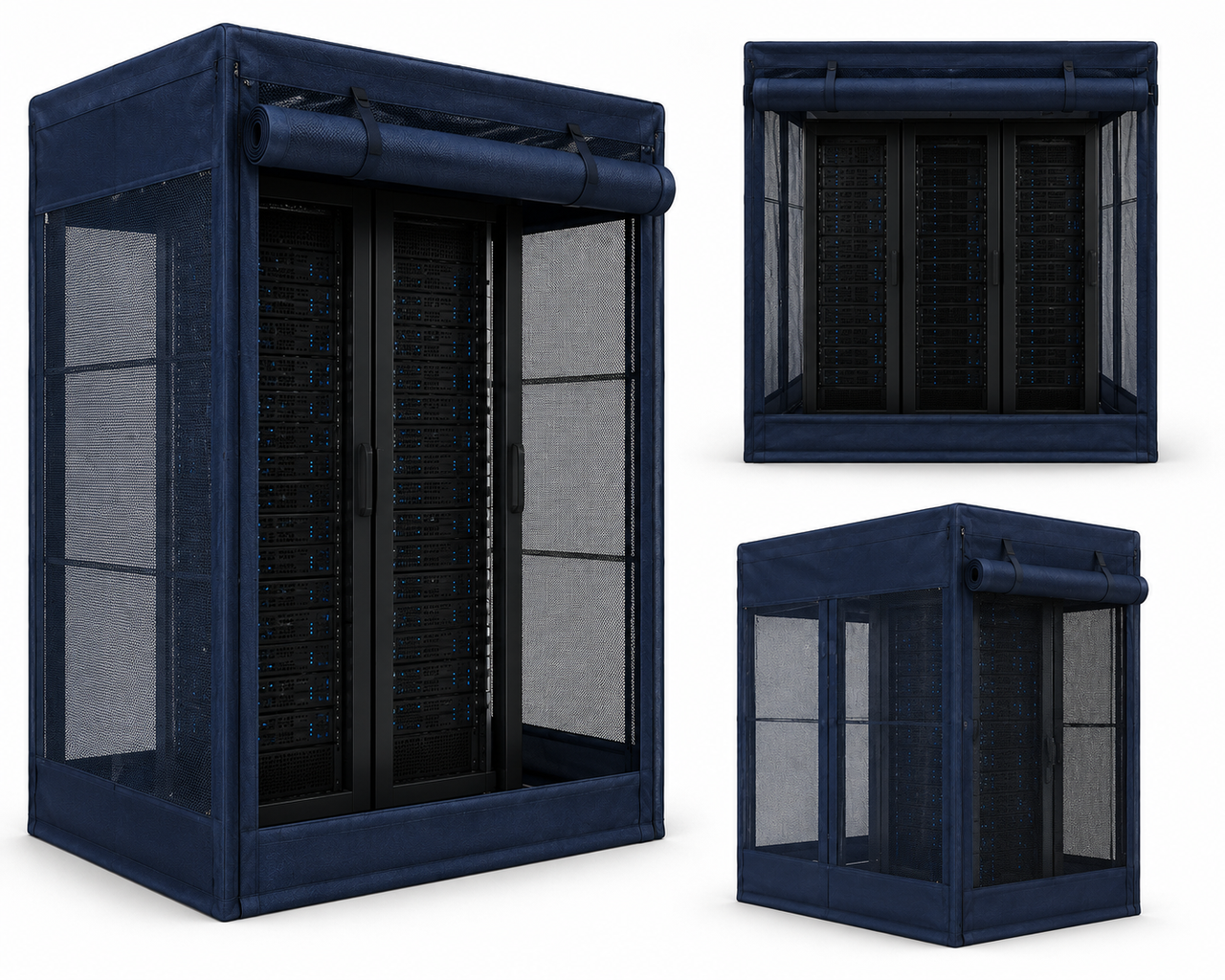
The impact of dust on cooling systems
Climate control is one of the most important elements in a Data Center. Equipment operates continuously and generates heat, requiring efficient cooling systems. When dust accumulates on filters, coils, and air inlets, cooling capacity is significantly reduced.
Consequences for operations
As a result, energy consumption increases, equipment operates at higher temperatures, component wear accelerates, and the infrastructure lifespan decreases. That is why controlling contamination is also a way to improve energy efficiency.
Construction and maintenance increase risks
- Renovations, expansions, and building adaptations generate airborne particles
- Installing new equipment can compromise areas that are already in operation
- Without proper isolation, contamination can reach critical equipment in service
During interventions, using physical protection solutions and custom made-to-measure barriers is essential to prevent particles from spreading into critical areas.
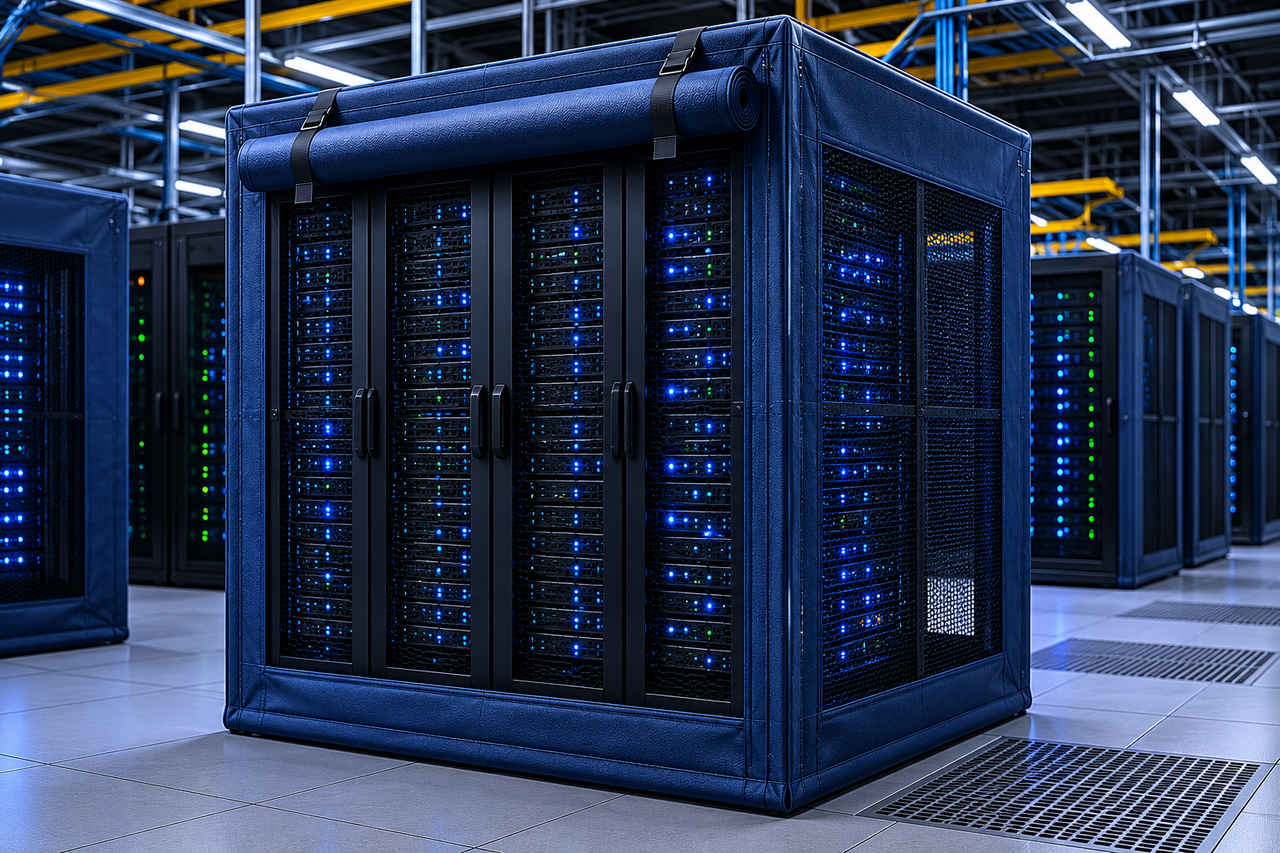
How to prevent particle contamination in critical environments
Prevention is the most efficient strategy to protect mission-critical environments. Investing in planned measures helps reduce unexpected failures, preserve equipment, and ensure safer conditions for expansions and future interventions.
Isolation of technical areas
The use of physical barriers helps prevent particles generated by construction or maintenance from reaching operational areas.
Equipment protection
Technical covers and protective enclosures can be used to protect racks, servers, and other sensitive equipment during interventions.
Access control
Reducing unnecessary movement of people helps minimize the entry of contaminants into the environment.
Specialized cleaning
Proper procedures help keep contamination levels within recommended standards.
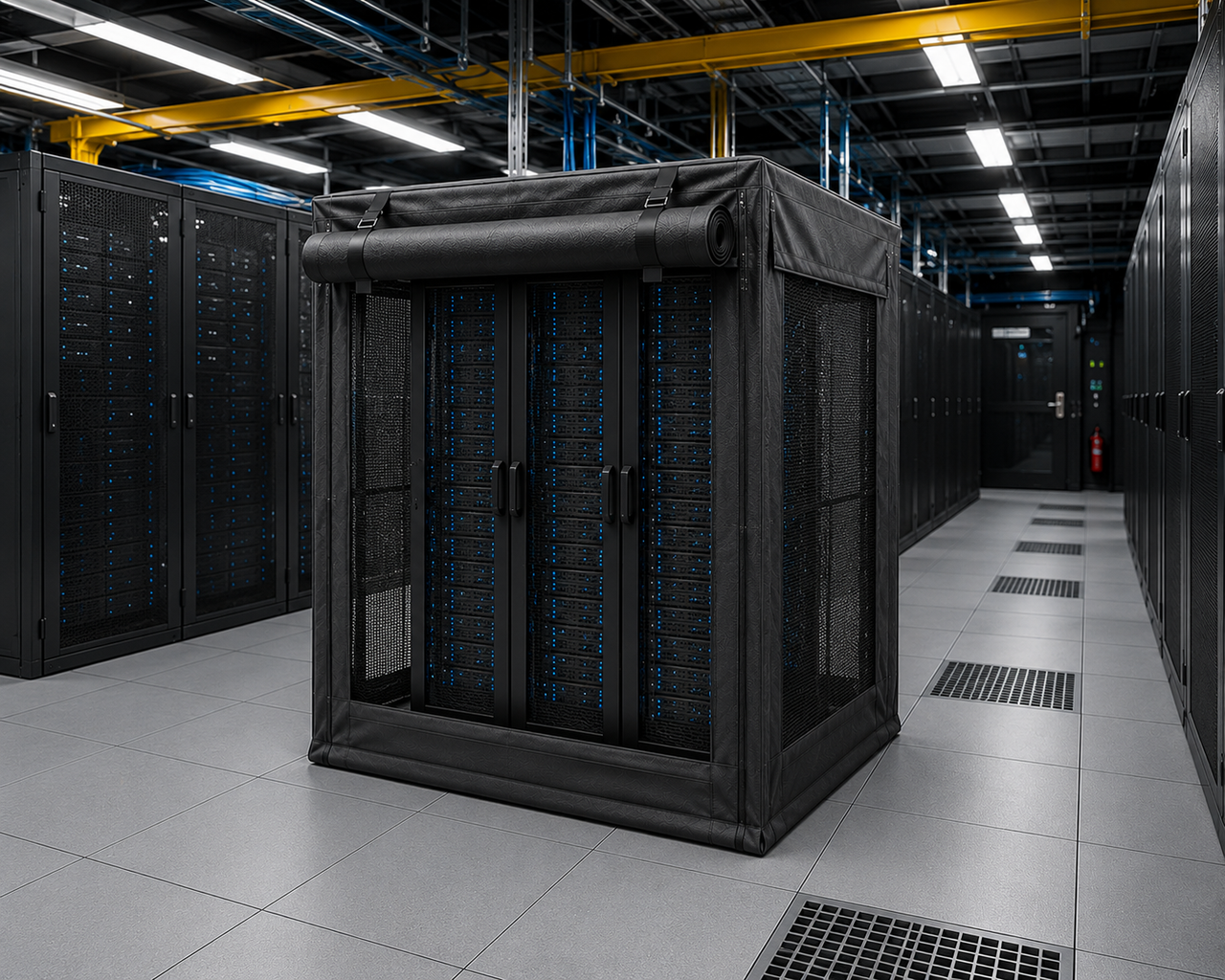
The importance of physical protection in Data Centers
Physical protection is one of the main strategies for ensuring infrastructure safety. Solutions such as flexible barriers, temporary enclosures, containment curtains, and custom made-to-measure covers help control particle dispersion and protect critical equipment during maintenance activities and construction work.
This approach significantly reduces operational risks and contributes to service continuity. Since each Data Center has specific characteristics, choosing the ideal solution should take into account the environment’s level of criticality, the type of equipment to be protected, the duration of exposure to risk, the type of activity being carried out on-site, and the need for access to the equipment.
Customized projects often provide greater efficiency and better adaptation to operational needs. In this context, CIKALA stands out with solutions focused on particle containment, isolation, and technical covers for sensitive environments.
Although often invisible, dust is a real threat to the safety and operational continuity of Data Centers. To protect assets, reduce maintenance costs, and ensure a safer and more efficient operation, rely on CIKALA. Visit the online store or contact us on WhatsApp to develop a custom protection solution for your critical infrastructure.
Frequently asked questions
Why is dust a problem in Data Centers?
Because it can accumulate on electronic components and cooling systems, harming performance, increasing temperature, and raising the risk of operational failures.
Do construction work and maintenance really increase contamination?
Yes. Renovations, expansions, electrical adaptations, and the installation of new equipment can generate a large amount of airborne particles, requiring proper isolation.
What measures help prevent particle contamination?
The main measures include isolating technical areas, protecting equipment, controlling access, and carrying out specialized cleaning.
When is it worth investing in custom solutions?
When the environment has high criticality, requires specific access, contains sensitive equipment, or presents operational conditions that demand a tailored approach for greater safety and efficiency.


