Protection for industrial welding areas
Thermal protection for industrial welding areas
How to reduce failures, preserve components, and increase reliability in high thermal stress welding environments
Industrial welding environments are areas of intense thermal stress, with strong radiant heat, incandescent metal spatter, and repeated thermal cycles. Compared to standard production areas, these conditions directly affect nearby structures, electrical systems, and moving components.
In this context, protection using industrial curtains, thermal barriers, and enclosure solutions becomes part of the project itself, not just a later corrective measure.
- Reduced thermal exposure for cables, hoses, and sensors
- Greater operational predictability and fewer unplanned stops
- Improved service life of assets exposed to heat and spatter
- Technical applications that can be designed to measure
CIKALA develops industrial solutions for containment, insulation, and production environment organization, including technical projects made to measure for welding areas with different levels of thermal demand.
Why welding heat compromises operational reliability
The electric arc in MIG, MAG, and TIG processes can reach temperatures above 3,000 °C at the melting point. Even with partial dissipation in the surrounding area, indirect thermal radiation is still enough to accelerate the degradation of polymers, electrical insulation, and technical coatings.
Heat transfer occurs through radiation, conduction, and convection. This means that even without direct contact with the heat source, exposed surfaces absorb energy throughout the shift, changing mechanical properties, reducing hose flexibility, and encouraging microcracks in synthetic materials.
Most common effects in areas without adequate protection
- Premature degradation of harnesses, connectors, and sensors
- Higher incidence of intermittent failures that are difficult to diagnose
- Accelerated wear of coatings and peripheral components
When thermal protection is not handled preventively, the impact appears in corrective maintenance, rework, and reduced line availability.
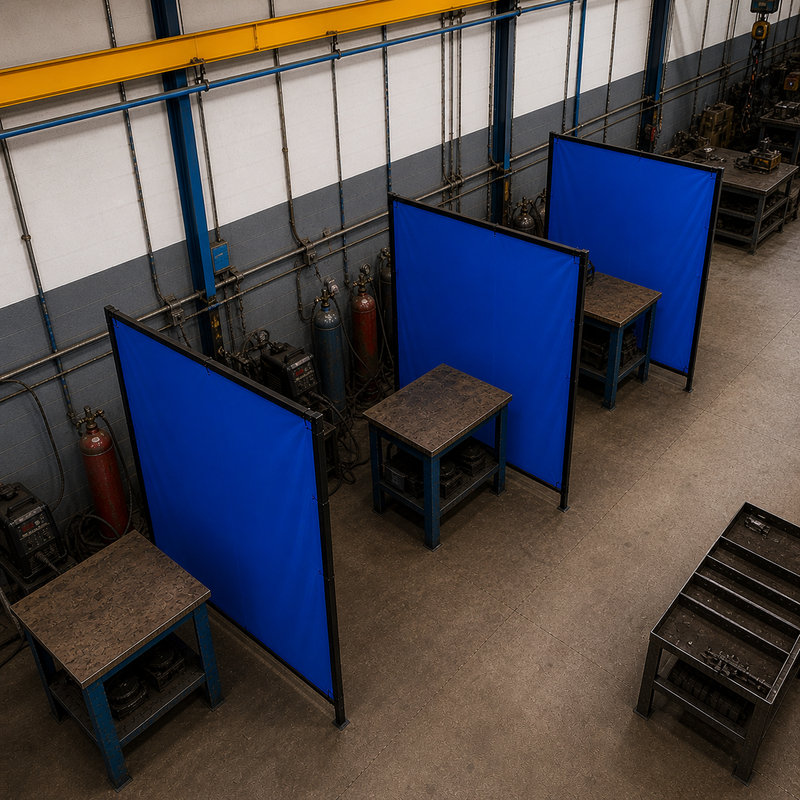
How to map critical points and specify the right solution
An efficient technical approach starts with mapping the area: distance from the heat source, predominant direction of spatter, cable and hose routes, operator circulation, and locations with a history of recurring maintenance. This diagnosis helps define the real level of aggressiveness and the best barrier or insulation configuration.
What to evaluate when sizing the solution
In addition to thermal resistance, it is necessary to consider inspection access, ergonomics, component mobility, and integration with the production routine. In many cases, industrial curtains and flexible barriers provide effective containment without disrupting operations.
Practical specification criteria
- Level of exposure to radiation and metal spatter
- Need for a fixed enclosure or a flexible solution
- Project definition according to area, layout, and application dimensions
Well-specified industrial thermal barriers reduce direct heat incidence, stabilize the surrounding area, and increase operational predictability in the welding cell.
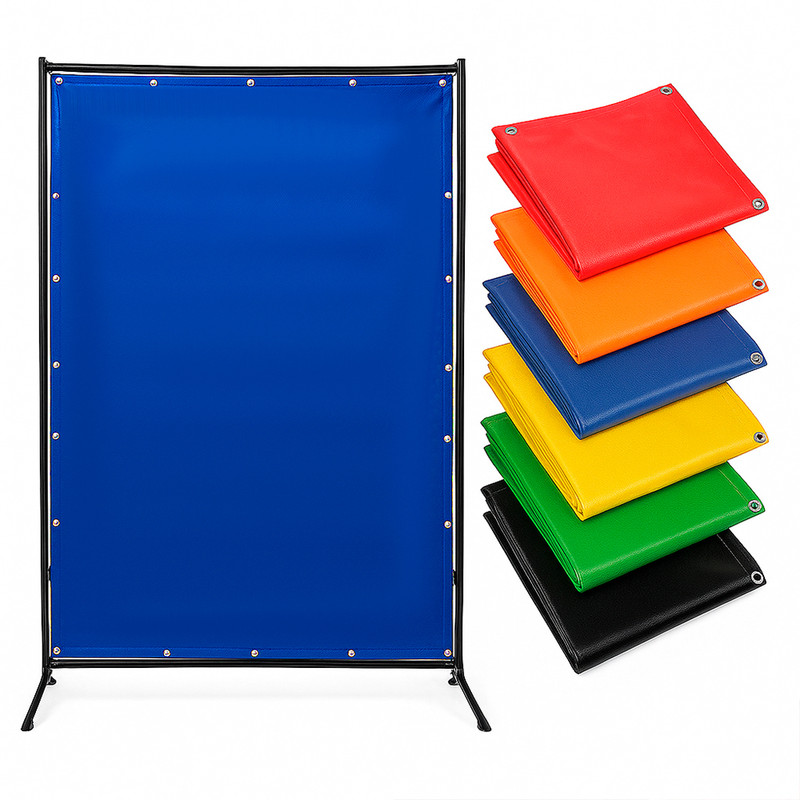
Operational benefits of thermal protection in welding areas
From a reliability standpoint, poorly controlled thermal exposure reduces mean time between failures, increases repair time, and affects OEE in high-throughput lines. On the other hand, adopting planned thermal protection brings direct gains for maintenance, safety, and asset service life.
Fewer hidden failures
Spatter and heat stop reaching sensitive components as often, reducing intermittent failures in sensors and connections.
Longer service life
Cables, hoses, coatings, and insulation operate under more controlled conditions and tend to last longer.
More stable operation
Thermal containment improves line predictability and helps reduce corrective interventions throughout the shift.
Process-aligned design
Technical solutions developed to measure adapt better to the layout, production routine, and application requirements.
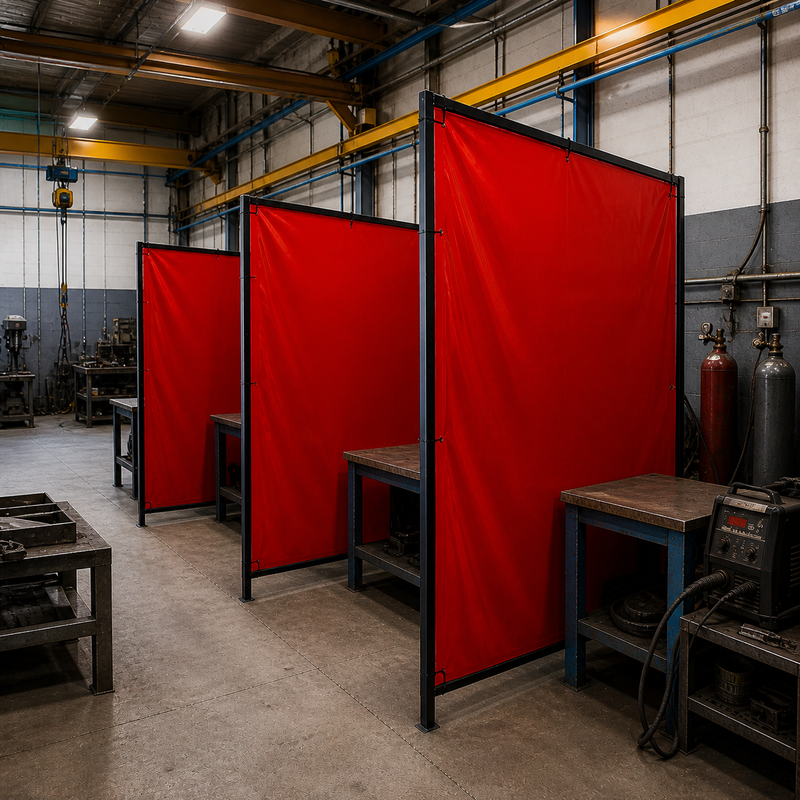
Conclusion
In industrial welding areas, thermal control should not be treated as a detail. The combination of radiation, spatter, and continuous exposure can quickly compromise operational reliability, increase maintenance costs, and reduce equipment availability.
By incorporating curtains, barriers, and insulation solutions from the project stage, industry gains more protection, stability, and service life for critical line assets.
CIKALA supports industrial demands with a focus on performance, safety, and durability, offering everything from ready-to-apply options to technical projects made to measure for welding environments.
Need a solution for thermal protection in a welding area? Rely on CIKALA to assess your application and recommend the best alternative, including a made-to-measure project according to your layout, process, and thermal stress level.
Frequently asked questions
Why is thermal protection important in industrial welding areas?
Because it helps reduce the exposure of components and structures to radiant heat and metal spatter, lowering failures, premature wear, and production downtime.
Can industrial curtains be used in welding cells?
Yes. When properly specified, they work as containment barriers and help protect adjacent areas, equipment, and operators against thermal and visual exposure.
How do you know whether the application requires a custom-made project?
When there are specific requirements related to layout, circulation, maintenance access, height, width, or thermal exposure level, a custom solution usually delivers better results.
Where to find CIKALA
See the company location on the map and make it easier to get in touch for a quote, purchase, or industrial technical solution development.
Institutional video
Learn more about CIKALA and its support for industrial demands and special projects.

