LINE DOWNTIME COSTS MORE THAN MAINTENANCE
Protection for Robotics in Industrial Automation
Reduce failures, preserve critical components, and increase operational continuity with technical solutions developed for harsh industrial environments.
Production line downtime costs far more than many companies expect. In industrial automation, the problem does not always start in the robot itself, but in the contamination that builds up around it.
Abrasive dust, fiberglass, paint mist, oil, metallic particles, and chemical residues can compromise sensors, hoses, connections, joints, and essential motion systems.
```- Less direct exposure to aggressive process agents
- Greater operational reliability in robotic cells
- Reduced corrective maintenance and unexpected downtime
- Longer service life for equipment and critical components
CIKALA develops industrial solutions for robotic protection with a focus on performance, durability, and custom-made applications for different operations.
Why robotic protection is strategic in industrial automation
When a robot operates in harsh environments, continuous exposure accelerates wear, reduces precision, and compromises process stability. This directly impacts productivity, quality, and maintenance costs.
Industrial technical protection works as a barrier between the environment and the robotic system, preserving sensitive parts and contributing to a safer and more predictable operating routine.
```Main risks without proper protection
- Contamination of sensors, cables, connections, and joints
- Operational failures caused by residue buildup and abrasion
- Partial or total production line stoppages with high productivity costs
In operations involving painting, welding, composites, metallic particles, or chemical agents, investing in protection is not a detail: it is part of the line availability strategy.
How industrial technical covers work
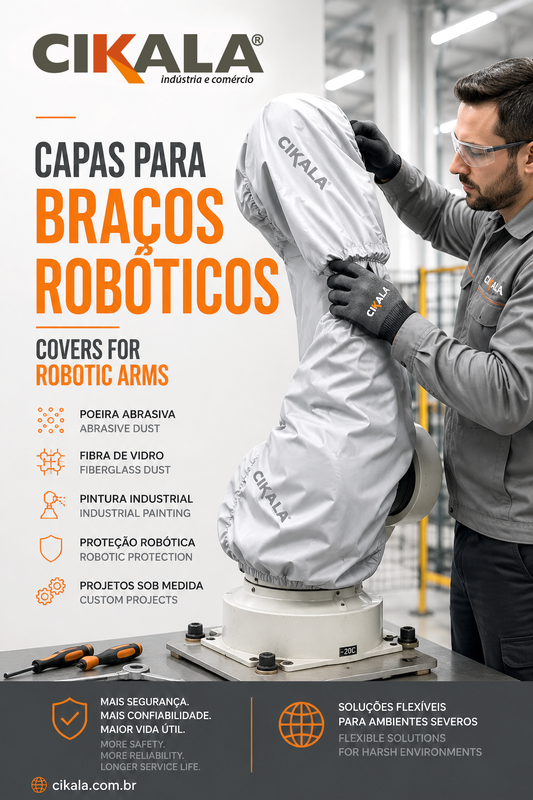
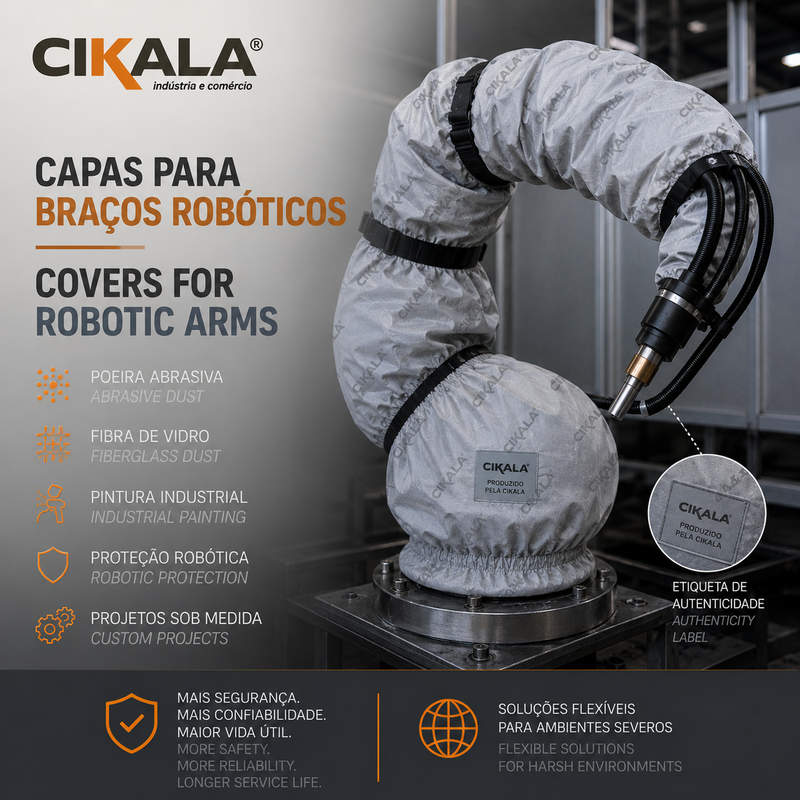
Industrial technical covers are designed to follow the robot’s geometry and movement, creating a protective layer without compromising operation. The goal is to combine flexibility, resistance, and ease of maintenance.
```Technical design aligned with the application
Each process requires specific analysis. Temperature, abrasion, range of motion, friction points, cleaning needs, and the level of environmental contamination must all be considered when developing the solution.
What should be evaluated during development
- Robot model and kinematics or the automated cell layout
- Actual industrial environment and process conditions
- Need for quick access for inspection and maintenance
Technical projects with specific applications require a custom-made solution. That is why CIKALA provides development tailored to each industrial operation.
Applications and industries served
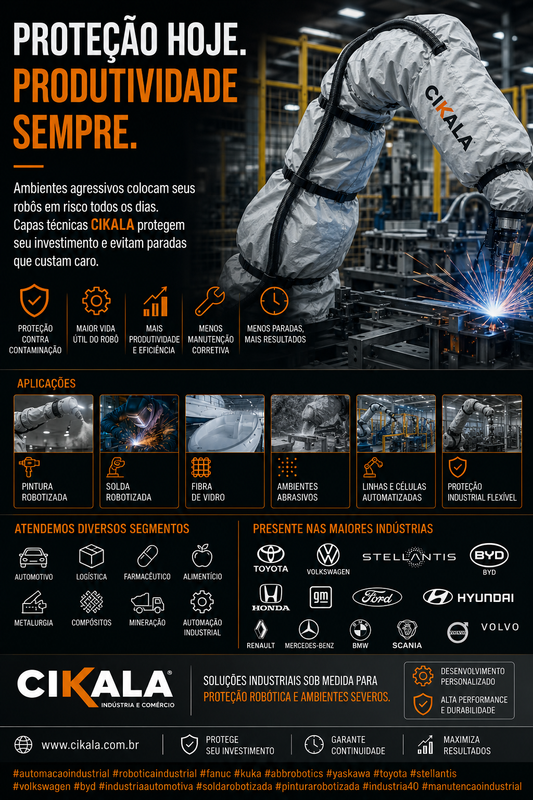
Modern automation depends on operational continuity. In harsh environments, relying on a dependable protection solution helps maintain performance, reduce contamination, and sustain operational productivity.
```Robotic painting and welding
Helps protect the system from paint mist, spatter, heat, and residues that affect robot performance.
Fiberglass and abrasives
Reduces the impact of aggressive particles on sensitive components, increasing assembly reliability.
Automated lines
Contributes to more stable operations in robotic cells, with less need for corrective intervention.
Diverse industrial sectors
Applicable in sectors such as automotive, logistics, pharmaceuticals, food processing, metallurgy, composites, and mining.
Conclusion
Companies that invest in industrial automation need to look beyond the equipment itself. Robot performance is directly linked to how well it is preserved during operation.
With a well-developed technical solution, it is possible to reduce failures, improve production predictability, and protect valuable assets in demanding processes.
```CIKALA delivers industrial solutions for robotic protection with a focus on real-world application, performance, and custom-made development.
If your operation requires technical protection for robots, automated cells, or harsh industrial environments, talk to CIKALA. For specific applications, WhatsApp support for a custom-made project is the most recommended path.
Frequently asked questions
```Why use robotic protection in industrial automation?
Because it helps reduce the robot’s direct contact with dust, abrasives, mist, residues, and other agents that can cause failures, wear, and production line downtime.
Can technical covers be custom-made?
Yes. In many applications, custom-made development is essential to match the geometry, movements, and demands of the industrial process.
Which industries can benefit from this type of solution?
Sectors such as automotive, metallurgy, logistics, pharmaceuticals, food processing, mining, and composites can benefit from robotic protection solutions.
When is it worth requesting a custom technical project?
When the environment involves abrasion, residues, heat, chemical agents, or any specific condition that requires a technical solution better suited to the operational reality.
Where to find CIKALA
See the company’s location below to make commercial contact and technical support easier.
```Institutional video
Learn more about CIKALA and its industrial solutions.
```

